
Marchantia
Marchantia
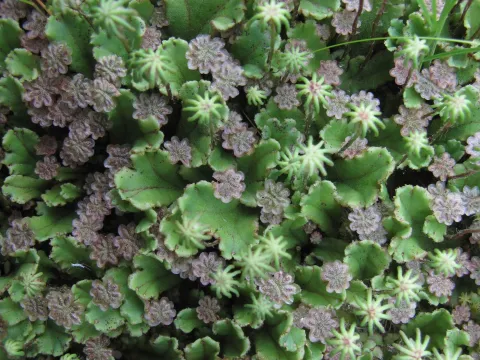
Marchantia is a genus of liverworts belonging to the family Marchantiaceae. These plants are non-vascular, spore-producing organisms that lack true roots, stems, or leaves, instead consisting of a flattened structure called a thallus.
What the section contains

Marchantia
The habitat requirements for Marchantia are strictly defined by high humidity and constant moisture. They typically grow in shaded areas, such as stream banks, damp forest floors, and areas disturbed by fire, where they serve as pioneer species.
Cultivation requires a growing medium with good water retention properties, such as a mixture of peat and sand or specialized agar-based media for laboratory use. The surface must remain consistently moist for optimal development.
Light levels should be moderate and diffused. Exposure to intense, direct sunlight is detrimental, as it increases the rate of evaporation and can cause severe damage to the delicate cells of the thallus.
Nutrient supply is essential, particularly nitrogen, which encourages rapid vegetative expansion. In controlled settings, a balanced mineral solution is provided to ensure continuous growth of the liverwort colonies.
The primary threat to the vitality of Marchantia is drought. As an organism lacking protective barriers like a thick cuticle, it loses water rapidly to the atmosphere, leading to desiccation and irreversible cellular damage.
Excessive humidity in stagnant air conditions can encourage the growth of molds and pathogenic fungi that colonize the thallus surface, leading to rapid decay of the plant material.
Competition from mosses and vascular plants often limits the expansion of Marchantia in wild settings, as other species can overgrow and shade out the liverwort, depriving it of essential light and space.
Environmental pollutants and chemical contaminants are significant threats. Due to its high absorption capacity, Marchantia is sensitive to toxic substances, which quickly penetrate its tissues.
To maintain healthy cultures, it is vital to ensure proper airflow and to periodically clear the substrate of invasive algae or debris that could impede the plant's ability to absorb moisture and nutrients.