
Common liverwort
Marchantia polymorpha
Description
Growing requirements
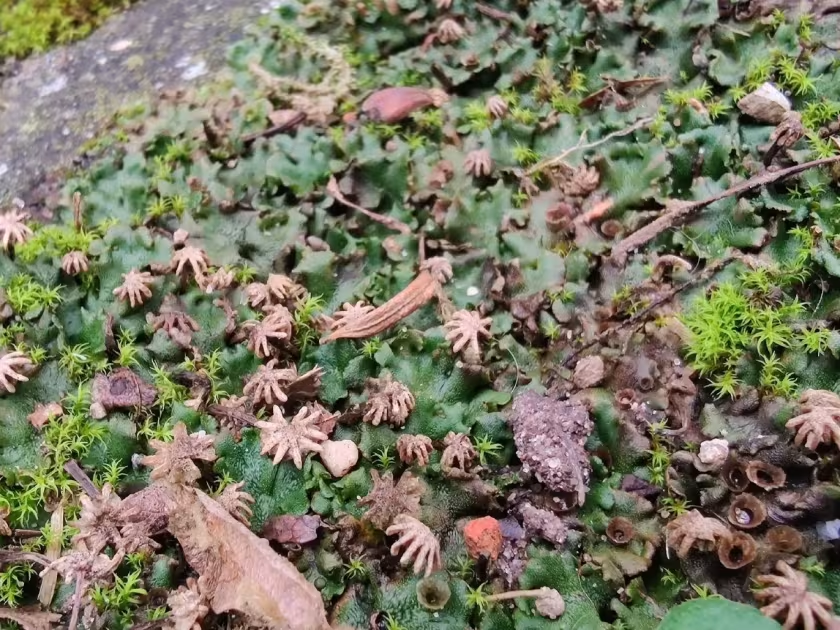
The common liverwort (Marchantia polymorpha) is a prominent species within the Marchantiaceae family. It is a cosmopolitan plant found worldwide in moist habitats, ranging from river banks to burned forest clearings. Its rapid colonization of open areas makes it a successful pioneer species in ecological succession.
Botanically, the plant consists of a flat, ribbon-like thallus that branches dichotomously. Its structure allows it to anchor firmly to the substrate via unicellular rhizoids. Unlike higher plants, it lacks vascular tissue, relying on direct absorption of water and minerals through its entire surface.
Climate requirements for this culture are centered on constant moisture. It thrives in humid conditions and requires a substrate that stays consistently damp. In a controlled environment, overhead misting systems or capillary mats are essential to maintain the high turgor pressure needed for growth.
Soil requirements involve a nutrient-rich, humus-based substrate with a neutral to slightly acidic pH. Good drainage is vital to prevent root rot and the accumulation of toxic byproducts. A mixture of peat and sand is typically recommended for optimal thallus development and healthy rhizoid growth.
The agricultural and research use of Marchantia polymorpha is significant. It serves as a vital model organism in plant genetics and developmental biology. Additionally, researchers explore its potential in pharmaceuticals due to the presence of unique terpenoids and other bioactive compounds.
Main diseases and pests
The primary threats to this species include rapid desiccation and fungal infections. Dry environments lead to the immediate shriveling of the thallus. Conversely, stagnant water can lead to the proliferation of pathogenic molds and bacteria that compromise the physical integrity of the plant.
Common pests include gastropods such as slugs and snails, which feed on the succulent thallus. Integrated pest management, focusing on physical exclusion or environmental manipulation to make conditions unfavorable for these pests, is the standard approach for maintaining healthy stocks.