
Ostreococcus
Ostreococcus
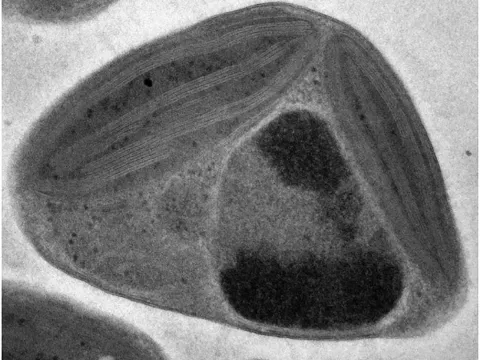
Ostreococcus is a genus of marine unicellular green algae belonging to the class Mamiellophyceae. It is recognized as the smallest free-living eukaryote, with cells measuring less than one micrometer in diameter.
What the section contains

Ostreococcus
Found throughout the world's oceans, Ostreococcus occupies a vital niche as a primary producer in marine ecosystems. Its ability to thrive in oligotrophic waters makes it a subject of extensive oceanographic studies.
Cultivation of Ostreococcus is primarily conducted in controlled laboratory environments or specialized bioreactors. The growth medium must closely mimic seawater conditions with specific micronutrient supplementation.
Environmental requirements include a precise light-dark cycle, as the organism is highly sensitive to light intensity for photosynthesis. Temperature stability is also crucial for maintaining optimal cell division rates.
The industrial potential of Ostreococcus is currently under investigation for its capacity to produce biofuels, lipids, and valuable proteins. Its genome is a model for understanding eukaryotic cellular architecture.
The primary natural threats to Ostreococcus populations are specific viruses that target and lyse the cells. These viral outbreaks play a significant role in controlling the population density of these algae.
In artificial culture systems, contamination by bacteria or other faster-growing microalgae is a constant challenge. Maintaining strict aseptic conditions is essential for the survival of the culture.
Anthropogenic environmental factors, such as changes in water chemistry and nutrient levels, significantly stress Ostreococcus. These stressors can lead to reduced metabolic efficiency and impaired growth.
Light limitation or excessive UV radiation can cause severe cellular damage to these organisms. Precise light management is required to prevent photo-inhibition or bleaching of the cells.
Toxicity from heavy metals or industrial pollutants can interfere with the essential physiological processes of Ostreococcus. Ongoing research seeks to identify strains with higher tolerance to environmental fluctuations.