
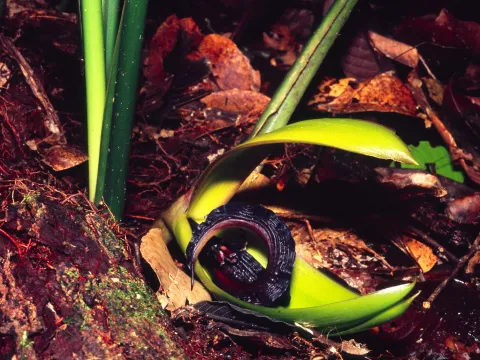
Orchidantha
Orchidantha
Orchidantha is a genus of perennial herbaceous plants belonging to the family Lowiaceae, within the order Zingiberales. This fascinating genus is primarily known for its unique floral morphology, often described as orchid-like, despite its closer biological relation to gingers and bananas.
What the section contains


Orchidantha
Native to the tropical rainforests of Southeast Asia, including regions in Malaysia and Borneo, the plant thrives in the understory of primary forests. It has evolved to grow in conditions characterized by constant high humidity and filtered, low-intensity light.
Botanically, the plant features large, basal leaves with long petioles and rhizomatous root systems. The flowers are distinctive, possessing a labellum-like structure that plays a critical role in specialized pollination mechanisms involving insects.
The agronomic requirements for Orchidantha are stringent, demanding temperatures between 20°C and 30°C throughout the year. It requires a well-draining, nutrient-rich, humus-based substrate that mimics the leaf litter environment of a rainforest floor.
In terms of economic and practical use, Orchidantha is cultivated primarily as a high-value botanical ornamental. Its rarity makes it a prized subject for conservatory collections and scientific botanical gardens specializing in rare tropical flora.
Root rot, primarily caused by fungal pathogens such as Pythium or Phytophthora, remains the most significant threat. This typically occurs in poorly aerated or waterlogged soils, necessitating perfect drainage management.
Spider mites (Tetranychidae) and mealybugs are the most prevalent pests. These thrive in the indoor or greenhouse environments where humidity levels are not consistently high, leading to sap-sucking damage on the foliage.
Chlorosis, induced by incorrect pH levels or nutrient imbalances, is a common physiological disorder. Ensuring that the substrate remains slightly acidic to neutral is vital for optimal nutrient uptake.
Sensitivity to direct, intense light is another management issue. Excessive solar radiation can cause severe leaf necrosis, making the implementation of shading systems essential for greenhouse production.
Effective management requires strict adherence to quarantine procedures when introducing new plant material to prevent the introduction of invasive pathogens that could devastate the delicate rhizomatous stock.