
Fringed Orchidantha
Orchidantha fimbriata
Description
Growing requirements
The Fringed Orchidantha (Orchidantha fimbriata) is a rare plant belonging to the Lowiaceae family, native to the tropical rainforests of Southeast Asia, specifically Malaysia. This perennial herbaceous plant is naturally adapted to low-light conditions and high humidity environments found on the forest floor.
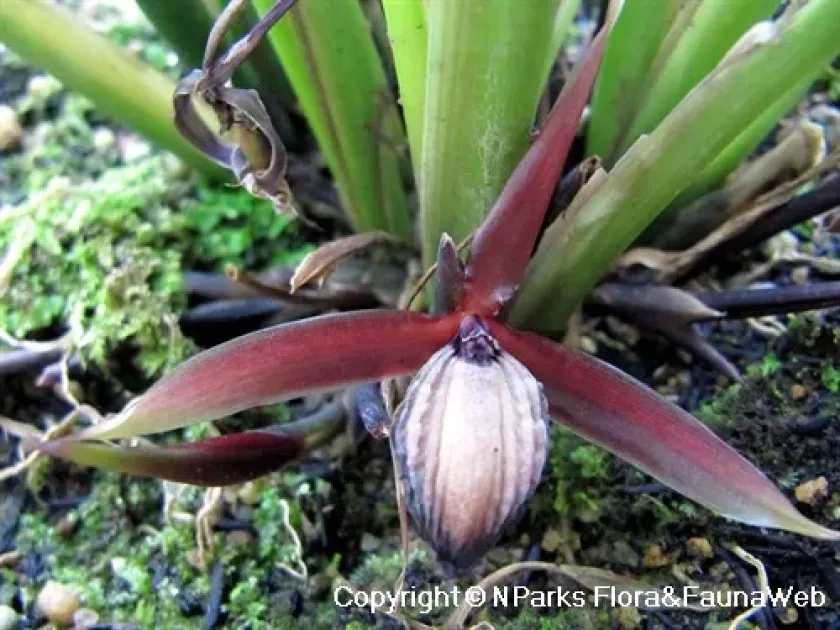
Botanically, the species features large, basal foliage and distinct, orchid-like flowers that are morphologically unique. The root system requires a well-aerated, loose substrate rich in organic matter, mimicking the natural humus-heavy environment of its native tropical habitat.
Successful cultivation requires stable temperatures between 22°C and 28°C. The plant is extremely sensitive to low atmospheric humidity; therefore, in indoor or greenhouse settings, high-pressure misting systems are essential to maintain leaf turgidity.
The substrate must remain consistently moist but well-draining to prevent waterlogging. A mixture composed of peat, pine bark, and perlite is recommended to ensure that oxygen reaches the rhizomes, preventing suffocating conditions.
Currently, the species is primarily grown by enthusiasts and in botanical gardens. Its potential for wider ornamental use lies in its ability to thrive in shaded environments, combined with its unique, exotic floral structure.
Main diseases and pests
Pathogenic fungi represent the primary threat to the Fringed Orchidantha, particularly when irrigation schedules are ignored or air circulation is insufficient. Overwatering typically results in rapid rhizome rot.
Pests such as spider mites and mealybugs are major concerns. They thrive in low-humidity environments and can cause significant damage to the plant by sap-feeding, leading to weakened growth and leaf chlorosis.
Integrated pest management, including the use of targeted acaricides and systemic insecticides, is necessary to control infestations. Regular monitoring of the leaf undersides is recommended to detect pests at the early stage.
Preventative measures center on strict adherence to watering practices and avoiding overhead irrigation, which can trap water in the leaf axils. Adequate air movement is crucial to inhibit the proliferation of fungal spores.
The species exhibits moderate natural resistance to diseases. Maintaining a clean cultivation environment and implementing quarantine procedures for new arrivals is essential to ensure the longevity of the plant collection.