
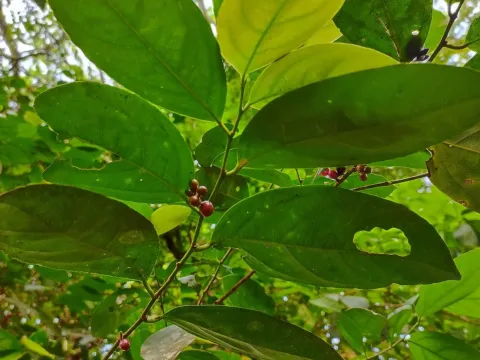
Lacistema
Lacistema
The genus Lacistema consists of evergreen shrubs and small trees belonging to the Lacistemataceae family. These plants are native to the tropical regions of the Americas, ranging from Southern Mexico through Central America to South America, particularly within the Amazon basin.
What the section contains

Lacistema
Botanically, these plants are identified by their simple, alternate leaves and distinctive small, bisexual flowers arranged in spikes. A unique structural feature is the disk-like receptacle where the stamens are positioned, which serves as a definitive characteristic for identifying this specific plant genus in nature.
For optimal growth, Lacistema requires the stable, humid conditions characteristic of tropical rainforests. It thrives in well-drained, nutrient-rich soils that retain consistent moisture, typical of forest understory environments where organic decomposition is high.
As a shade-tolerant species, the plant is well-adapted to the low-light conditions beneath the dense forest canopy. It is highly sensitive to environmental extremes, particularly frost or prolonged drought, which can significantly inhibit its metabolic processes and structural integrity.
While not a commercial crop for large-scale agriculture, the plant remains a subject of interest in taxonomic and ecological research. Its role within the forest ecosystem contributes to local biodiversity, and its genetic profile is studied to better understand the evolutionary history of tropical plant families.