
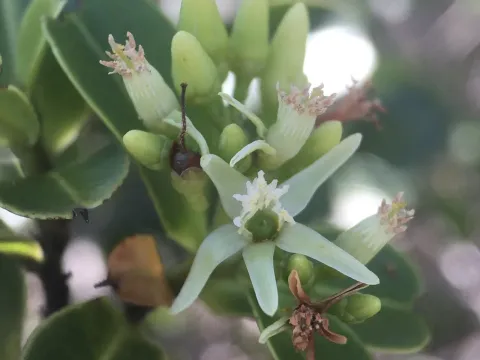
Humiria
Humiria
The genus Humiria comprises evergreen trees belonging to the Humiriaceae family, native to tropical regions of South America. These trees are typically found in rainforest environments, often thriving in sandy or nutrient-poor soils where they compete effectively for resources.
What the section contains

Humiria
Humiria species demand high temperatures and high humidity levels throughout the year to maintain metabolic activity. The cultivation or preservation of these trees is dependent on stable climatic conditions, as they are not adapted to withstand temperature extremes or frost.
Botanically, Humiria is characterized by coriaceous leaves and specialized aromatic compounds found in the wood and sap. These chemicals often act as a natural defense mechanism against herbivores and pathogens in the densely populated tropical understory.
The wood of Humiria is highly regarded for its physical density and durability. In local economies, it is utilized for construction purposes, particularly where high humidity requires materials that possess natural resistance to decay and biological degradation.
The fruit of the Humiria tree consists of drupes that provide food sources for both local wildlife and human communities. While the species is not a major industrial crop, it remains a vital component of the tropical ecosystem and contributes to local biodiversity.
The primary threat to the Humiria population is large-scale deforestation, which disrupts the delicate balance of tropical soil and microclimate. Habitat fragmentation limits the natural dispersal of seeds, hindering forest regeneration.
Pests such as wood-boring beetles present a constant risk to the integrity of the tree trunks, especially in stressed specimens. Additionally, fungal pathogens thrive in the humid tropical environment, potentially causing rot if the tree's health is compromised by external damage.