
Halimeda
Halimeda
Halimeda is a prominent genus of green macroalgae belonging to the Halimedaceae family. It is uniquely recognized for its high calcium carbonate content, which allows it to contribute significantly to the structural integrity of tropical coral reef environments.
What the section contains

Halimeda
The distribution of this genus spans global tropical and subtropical regions. It thrives in diverse marine habitats, ranging from shallow sandy bottoms to deeper, clearer waters where photosynthetic activity is supported by abundant sunlight penetration throughout the water column.
Environmental requirements for these algae include stable marine salinity and optimal thermal ranges. As they are calcifying organisms, they rely on the availability of dissolved inorganic carbon and calcium ions within the seawater to facilitate the formation of their rigid segments.
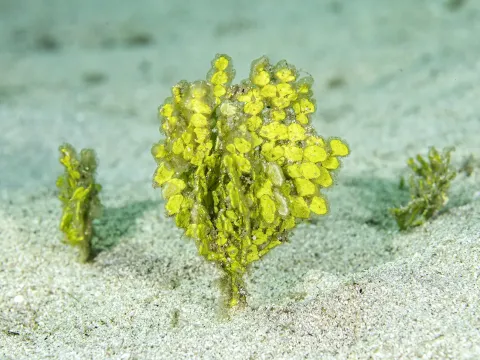
The morphology of the genus is characterized by a segmented thallus, often described as chain-like structures. Each segment undergoes calcification, transforming the soft organic tissue into a durable, white, mineral-rich structure that persists long after the plant tissue has decayed.
Agricultural and commercial interest in Halimeda is primarily directed toward bio-resource management and the restoration of reef ecosystems. It is also a staple in marine aquarium hobbyist circles, where it is cultured to naturally buffer water chemistry and maintain a biological balance.