
Halimeda tuna
Halimeda tuna
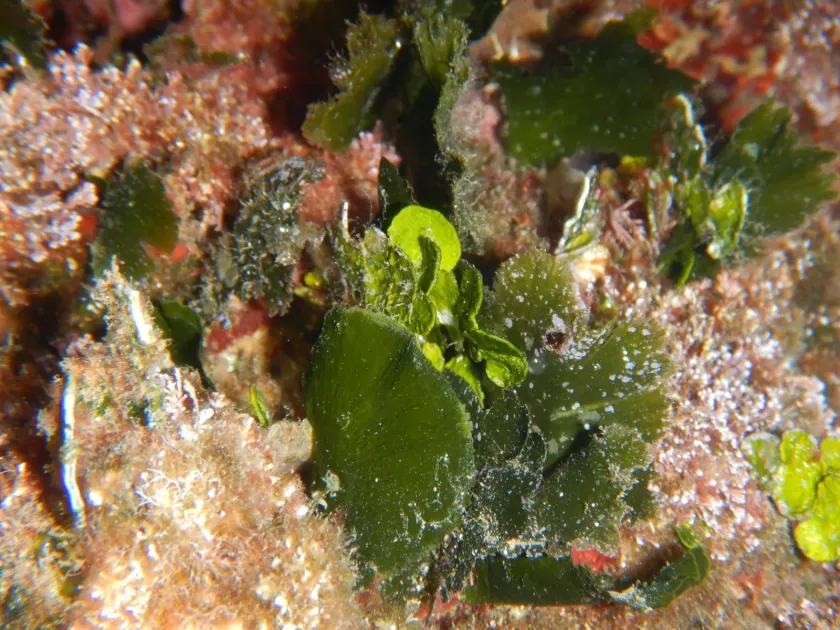
Description
Growing requirements
Halimeda tuna is a notable green alga species belonging to the Halimedaceae family. It is widely distributed throughout tropical and subtropical oceans globally.
The organism is scientifically significant for its calcification process, where it deposits calcium carbonate in its segments, contributing to sediment formation.
It thrives in clear, shallow marine environments where high levels of solar radiation support efficient photosynthesis and carbonate accumulation.
Optimal growth conditions require consistent salinity levels and a warm temperature range, typically exceeding 18 degrees Celsius throughout the year.
The plant relies on specialized rhizoidal structures to anchor itself firmly into sandy or rocky substrates on the ocean floor.
Yield
While primarily ecological, Halimeda tuna presents potential in aquaculture as a specialized crop for sustainable bioproducts.
Agricultural research is exploring its biomass as a bio-fertilizer additive, providing a natural source of calcium and essential minerals for soil health.
In controlled marine environments, productivity is managed by optimizing light intensity and nutrient concentrations to ensure steady segmentation.
Sustainable harvesting techniques allow for the selective removal of segments, ensuring the plant remains viable for future cycles of growth.
Extracts from this seaweed are also being investigated for their unique polysaccharide profile, which has applications in the biochemical industry.
Main diseases and pests
The primary environmental threat to Halimeda tuna is ocean acidification, which interferes with its ability to synthesize calcium carbonate.
Industrial pollution, particularly heavy metal contamination, poses a severe risk to the health and structural integrity of the algal segments.
Marine herbivores, including specific species of gastropods and reef fish, can cause significant damage by feeding on the algae's calcified parts.
Pathogenic outbreaks often occur due to physical trauma following storm events, which introduces opportunistic bacteria to the plant tissue.
Stagnant water conditions are detrimental, as they inhibit gas exchange and promote the colonization of invasive epibionts that outcompete the alga.