
Umbrella fern
Sticherus flabellatus
Description
Growing requirements
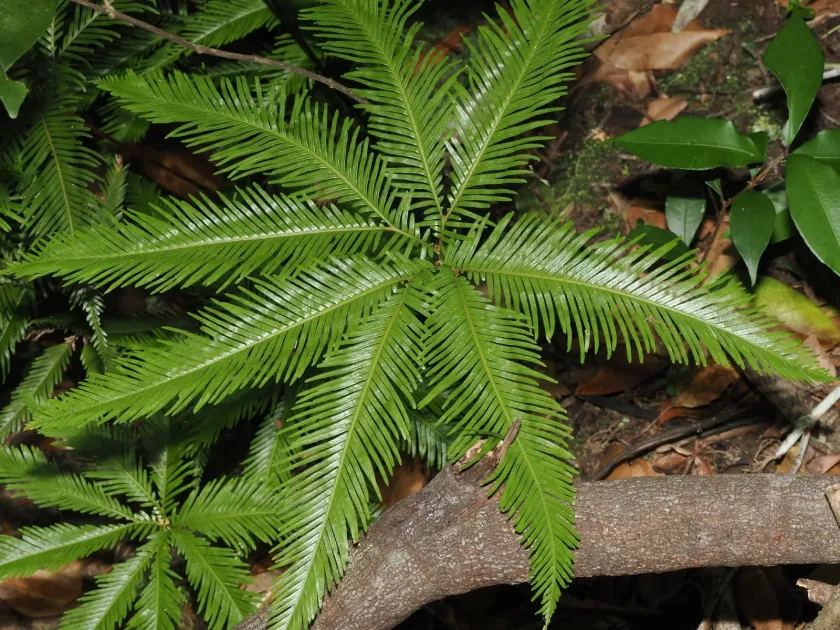
The Umbrella fern (Sticherus flabellatus) belongs to the family Gleicheniaceae. Native to the damp, shaded rainforests of Australia, New Zealand, and the Pacific Islands, this fern is known for its elegant and distinctively branched fronds.
Botanically, this species is defined by its dichotomous branching pattern, which creates a fan-like or umbrella appearance. It typically grows via creeping rhizomes, allowing it to form dense colonies on the forest floor where humidity remains constant throughout the year.
For successful cultivation, mimicking its natural environment is essential. High atmospheric humidity, ideally above 70%, is required. The plant should be positioned away from direct sunlight, as strong light will bleach the delicate foliage and cause severe leaf scorching.
The substrate must be well-draining yet capable of holding moisture. A peat-based mix supplemented with perlite or orchid bark is highly recommended to ensure oxygen reaches the root system and to prevent the substrate from becoming waterlogged.
Consistent temperatures are vital for this plant. It thrives best in a stable environment ranging from 18 to 24 degrees Celsius. It is crucial to avoid sudden temperature fluctuations and cold drafts, which can cause significant stress to the plant's vascular system.
Main diseases and pests
The most common health issue for the Umbrella fern is root rot, typically caused by poor drainage or excessive watering. Once the roots are compromised, the foliage often shows symptoms of browning and curling, which is difficult to reverse once started.
Common indoor pests such as spider mites and scale insects can infest the plant, especially in drier environments. Proactive care, including misting the leaves and keeping the surrounding area clean, is the best strategy to keep these pests at bay.