
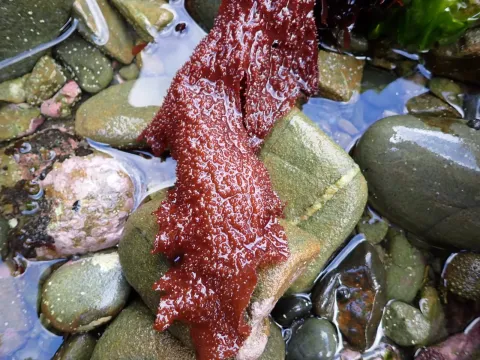
Sarcothalia
Sarcothalia
Sarcothalia is not a traditional crop grown in soil; its cultivation involves vegetative propagation in marine environments using thallus fragments.
What the section contains

Sarcothalia
The planting season typically begins in early spring, when seawater temperatures reach levels conducive to rapid cell division and growth.
Seedlings are attached to ropes or substrate structures that are submerged at specific depths to optimize light exposure for photosynthesis.
The spacing of the plants is carefully managed to ensure adequate nutrient circulation and to prevent overcrowding in the marine farm.
Regular maintenance is performed by farm technicians who inspect the ropes for biofouling and ensure that the algae remain properly secured to the substrate.
Sarcothalia belongs to the Gigartinaceae family and is highly specialized for life in cool, well-oxygenated marine waters.
The culture requires a stable environment with consistent salinity, as significant fluctuations caused by heavy rainfall or river runoff can be detrimental.
The availability of dissolved nutrients, particularly nitrogen and phosphorus, is a critical driver for biomass accumulation in these marine ecosystems.
Temperature is a key regulatory factor; prolonged exposure to warm water can trigger stress responses and stunt the growth of the seaweed.
Light penetration in the water column must be sufficient for consistent photosynthesis, making clear coastal waters the ideal location for cultivation.
Yield is primarily measured by the total weight of the harvested biomass produced over a specific growing period within a controlled marine area.
Advanced farming methods allow for efficient harvesting cycles, sometimes enabling multiple harvests per year in regions with temperate climates.
The economic value of the yield is heavily dependent on the concentration of carrageenan, a phycocolloid produced by the seaweed.
Researchers are actively developing optimized strains through selective breeding to enhance both the growth rate and the chemical quality of the algae.
Total production figures are essential for determining the profitability of seaweed farms and ensuring the sustainability of the supply chain.
The most common threats to Sarcothalia include the proliferation of epiphytes that compete for sunlight and nutrients, often leading to biomass loss.
Pathogenic organisms, including bacteria and fungi, can cause diseases that degrade the structural integrity of the thalli in suboptimal water conditions.
Marine pests and grazers, such as certain crustacean species, can physically damage the seaweed, hindering its growth and making it susceptible to rot.
Rising seawater temperatures, a result of climate change, pose a significant risk of bleaching and population decline for this sensitive species.
Pollution from industrial or agricultural runoff can contaminate the seaweed, negatively impacting its safety profile and marketability.
Harvesting is performed by utilizing specialized marine equipment designed to lift substrate ropes onto vessels for processing.
It is crucial to harvest at the precise maturity stage to ensure that the content of extractable polysaccharides is at its peak.
Initial processing involves cleaning the biomass to remove sediment, invasive seaweed species, and other debris collected from the marine environment.
The material must be dried efficiently using sun or industrial drying methods to prevent biological degradation before storage.
Proper storage in dry, cool conditions ensures the longevity of the raw material before it is processed into specialized industrial and food ingredients.