
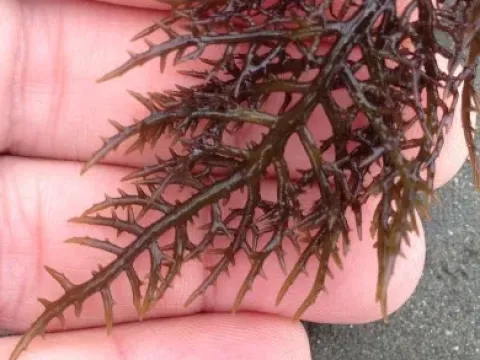
Chondracanthus
Chondracanthus
Chondracanthus is a genus of red algae belonging to the family Gigartinaceae, recognized for its significant role in marine aquaculture. This organism is strictly adapted to marine environments, requiring precise control over water salinity and mineral balance for optimal development.
What the section contains

Chondracanthus
The culture thrives in cool to temperate coastal waters where strong currents facilitate the continuous supply of essential nutrients. Light penetration is a critical factor, as these algae rely on specific light spectra at their attachment depths for efficient photosynthesis.
Farming is typically conducted on artificial substrates, such as mesh ropes or nets, deployed in sheltered bays. These structures provide the necessary support for the thalli to attach and grow, while allowing for standardized density management across the production area.
Botanically, Chondracanthus features a complex, branching thallus structure that is highly resilient to wave action. This evolutionary adaptation allows the seaweed to survive in high-energy coastal zones, which is an advantage for large-scale maritime operations.
The primary economic value of this crop stems from its high content of carrageenans, which are essential stabilizers in the global food industry. Ongoing research explores its further utility in bioplastics and medicinal compound extraction due to its rich secondary metabolite profile.
Epiphytic organisms represent a major threat to Chondracanthus cultivation, as they often outcompete the seaweed for nutrients and light. Persistent epiphytic growth can significantly lower the quality and yield of the harvested biomass if not managed correctly.
Environmental stressors, particularly rising water temperatures due to climate change, can trigger bleaching and tissue necrosis. Sustained heat stress often leads to a decline in crop vitality and an increased susceptibility to secondary infections.
Anthropogenic eutrophication caused by agricultural or industrial runoff promotes the growth of opportunistic algae and pathogens. Such imbalances in water chemistry can create toxic environments that devastate entire seaweed plantations.
Marine herbivores, including crustaceans and echinoderms, pose a risk to young, tender thalli. Effective pest management strategies, such as the use of protective nets, are often required to prevent excessive grazing damage in open-water farms.
Specific fungal and bacterial pathogens can cause localized rot, which may spread rapidly under high-density conditions. Regular monitoring and the removal of compromised plant material are essential to maintaining the overall health of the farm.
Harvesting of Chondracanthus is performed either by mechanical cutting or manual collection once the thalli reach target size and biomass density. Specialized marine equipment is utilized to ensure efficient extraction while minimizing disruption to the seabed or substrate.
The timing of the harvest is dictated by the chemical maturity of the seaweed, specifically the concentration of carrageenans in the cell walls. Analytical testing ensures that the seaweed is harvested at the peak of its quality for industrial processing.
Post-harvest processing involves immediate cleaning to remove sand, debris, and epiphytic organisms. Maintaining high levels of cleanliness at this stage is crucial for meeting regulatory standards required for food-grade products.
The drying process is performed using controlled industrial dryers or solar-powered ventilation facilities. This step is vital to reduce moisture content to safe levels, thereby preventing spoilage during transport and long-term storage.
Storage of the processed biomass requires climate-controlled warehouses with low humidity. Strict adherence to storage protocols ensures the longevity of the product's chemical properties and protects the investment made during the growth cycle.