
Sarcothalia crispata
Sarcothalia crispata
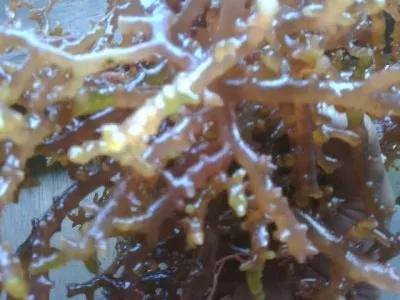
Description
Growing requirements
Sarcothalia crispata belongs to the Gigartinaceae family. It is a perennial red marine alga that holds significant interest for modern mariculture and industrial applications.
In its natural habitat, this species grows in cold and temperate waters of the Southern Hemisphere. The densest populations are found off the coasts of Chile, Argentina, and the Falkland Islands.
For successful growth, the culture requires stable salinity levels and a high concentration of dissolved minerals. The optimal temperature range for vegetation is between 8 and 15 degrees Celsius.
The seaweed prefers areas with active water movement, as the surf facilitates effective gas exchange and delivers essential nutrients to the thalli. Light is a key factor, so cultivation depth is typically limited to the photic zone, up to 15–20 meters.
Industrial cultivation techniques involve the use of specialized substrates, such as ropes or nets, where spores or vegetative thallus fragments are attached for subsequent growth.
Yield
The commercial use of Sarcothalia is based on the extraction of carrageenans — natural polysaccharides widely used in the food, pharmaceutical, and cosmetic industries as thickening agents.
The seaweed biomass actively accumulates sulfated galactans, making it a valuable raw material for biotechnological production. Yield depends on the purity of coastal waters and the intensity of solar radiation.
In controlled aquaculture, the dry matter yield per unit area is significantly higher than in wild harvesting due to the minimization of competition with other flora species.
Applying modern mariculture technologies allows for multiple harvests per season, ensuring a stable supply of raw materials for processing facilities.
The economic efficiency of cultivation is also determined by the quality of the extract, which depends on the plant's growth stage at the time of harvesting.
Main diseases and pests
The main threats to plantations are epiphytic microalgae, which can cover the thallus surface, hindering photosynthesis and nutrient absorption.
Serious danger is posed by infectious diseases of bacterial origin, which can cause softening and subsequent tissue necrosis in the seaweed when water temperatures rise.
The impact of aggressive marine herbivores, such as sea urchins and certain crustacean species, can lead to a significant reduction in biomass on installed plantations.
Abrupt changes in climatic conditions, including abnormal increases in ocean temperatures, negatively affect the metabolism and reproductive capacity of Sarcothalia crispata.
Anthropogenic pollution of coastal waters with heavy metals and an excess of nutrients can inhibit the growth of cultivated populations and reduce the commercial quality of the raw material.
Harvesting
Harvesting of Sarcothalia is primarily carried out mechanically using specialized vessels equipped with devices designed to cut the thalli from the substrate.
A crucial step is the prompt drying of the raw material immediately after extraction from the water to prevent enzymatic degradation and the loss of valuable polysaccharides.
The primary processing stage includes cleaning the seaweed of debris, sand, and epiphytes, which is critical for meeting industry quality standards.
Transportation of the freshly harvested biomass requires maintaining specific temperature conditions to avoid product spoilage before industrial processing begins.
Strategic harvesting planning is based on monitoring the life cycle phases of the seaweed to achieve the maximum carrageenan content in the biomass.