
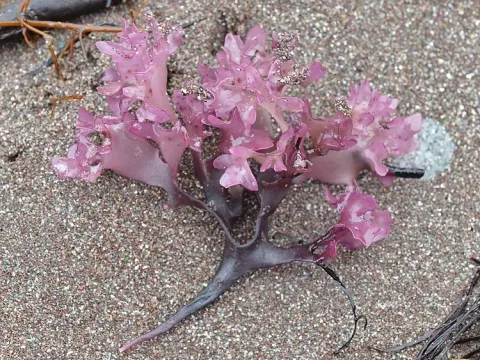
Chondrus
Chondrus
Chondrus crispus, commonly known as Irish moss, is not seeded in soil but rather propagated through vegetative cuttings or spore-based methods in aquaculture. It is a perennial red alga that relies on stable attachment to a substrate.
What the section contains

Chondrus
The "planting" process involves attaching algal fragments onto ropes, nets, or plastic substrates. This setup is then deployed in the marine environment or in large onshore tanks, typically timed with seasonal growth cycles to ensure rapid establishment.
Optimal spacing is crucial during the attachment phase to prevent competition for nutrients and light. Ensuring proper water flow through the culture is essential for the healthy development of the algal thalli.
In controlled environment agriculture, planting can occur year-round. Tanks are monitored for light intensity and water circulation to mimic the natural ecological conditions required for optimal vegetative growth.
Strategic deployment of these substrates in coastal waters requires careful planning to ensure the structures can withstand local currents and wave action, preventing the loss of the crop during early growth stages.
As a member of the Gigartinaceae family, Chondrus requires cool to temperate oceanic waters to thrive. It is native to the northern Atlantic, demanding high salinity and specific light conditions for photosynthesis.
Temperature management is critical; Chondrus performs best between 5 and 20 degrees Celsius. Deviations from this range can lead to physiological stress and slowed growth rates, impacting the final biomass yield.
Nutrient availability is a key factor, specifically the presence of nitrates and phosphates. In closed-loop systems, these must be supplemented regularly to ensure the seaweed remains healthy and productive throughout its cycle.
Light penetration, or the use of artificial full-spectrum lighting, is vital for the development of essential pigments and carrageenan production. The light cycle must be carefully balanced with the growth phase of the alga.
Substrates used for growth must be inert, non-toxic, and capable of maintaining a stable, biofilm-free surface, which allows for the successful long-term fixation of the seaweed during the cultivation cycle.
Yield in Chondrus farming is measured by the total biomass harvested per unit of substrate. Advanced mariculture techniques focus on increasing the yield by optimizing water movement and nutrient concentration.
The growth cycle typically ranges from three to six months, depending on environmental variables. Through intensive management, farmers can achieve multiple harvest rotations per year, significantly increasing efficiency.
The primary economic product is the carrageenan content within the cell walls. High-yielding strains are prioritized in aquaculture, as they offer better industrial value for food gelling applications.
Compared to wild-harvested seaweed, cultivated Chondrus provides a consistent and high-quality supply, free from contamination, which is essential for meeting the strict standards of the food industry.
Profitability is determined by balancing the operating costs—such as water pumping and infrastructure maintenance—with the high market demand for natural gelling agents and nutritional supplements derived from algae.
Bacterial infections and fungal pathogens are the most significant threats to Chondrus health, often leading to tissue necrosis. These issues are frequently linked to poor water quality and stagnant conditions.
Small crustaceans and sea urchins are known pests that can decimate a crop by grazing on the thalli. Preventive measures include physical barriers and regular monitoring of the farming site.
Toxic algal blooms represent a serious environmental threat, as they can rapidly deplete oxygen levels or introduce toxins that damage the Chondrus crop, rendering it unsuitable for human consumption.
Storms and high-energy wave events present physical risks to the infrastructure. Proper selection of sheltered sites for coastal farms is the best defense against these natural hazards.
Regular maintenance, including the cleaning of substrates and the removal of epiphytic algae, is necessary to keep the crop healthy and prevent the spread of diseases within the cultivation system.
Harvesting is performed by carefully trimming the mature thalli from the substrate. Leaving the base of the plant attached allows it to regenerate, ensuring a sustainable cycle for the next harvest.
Post-harvest processing involves washing the seaweed to remove sand, epiphytes, and debris. Cleanliness is paramount to maintaining the high quality of the raw material required for industrial extraction.
Traditional sun-drying on outdoor racks is common, as it induces natural bleaching of the pigments. This process is energy-efficient and results in the characteristic color of commercial Irish moss.
Large-scale producers often employ controlled mechanical drying, which regulates temperature and humidity to ensure consistency and prevent the degradation of bioactive compounds within the seaweed.
Finally, the dried product is compressed into bales for transport. From there, it is shipped to processing plants where it is milled or treated for the extraction of high-quality carrageenan.