
Irish moss
Chondrus crispus
Description
Sowing dates
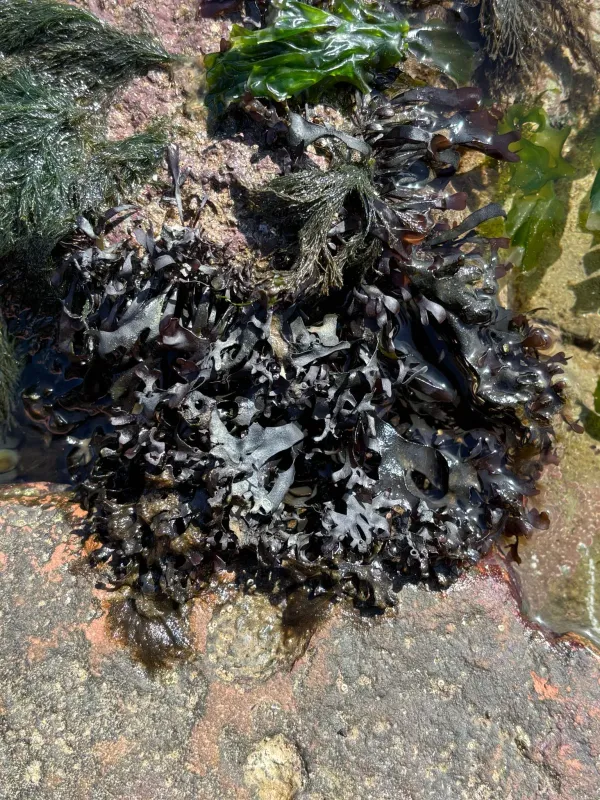
Irish moss (Chondrus crispus) is a species of red algae belonging to the Gigartinaceae family, naturally found on rocky shores in the North Atlantic.
In aquaculture, the propagation is achieved by attaching cuttings or vegetative fragments to netting structures or specialized substrate ropes placed in the ocean.
Successful establishment depends on the algae's ability to anchor firmly to the substrate, which requires clear water conditions free from excessive suspended sediments.
The planting phase is typically scheduled during optimal hydrological seasons when water temperature and nutrient concentrations favor rapid biomass expansion.
Careful management of plant density is essential, as overcrowding limits the amount of light reaching the lower parts of the thalli, reducing overall growth rates.
Growing requirements
This cold-water crop thrives in environments where water temperatures remain between 5 and 15 degrees Celsius, typical of temperate coastal zones.
High water clarity is vital to ensure maximum light penetration, which is the primary driver for photosynthesis and the synthesis of valuable hydrocolloids.
The crop requires constant water circulation to ensure a continuous supply of essential minerals and to prevent the localized depletion of nutrients.
While the algae do not grow in soil, the choice of a stable, inert substrate is critical to prevent the loss of the crop during high-energy currents or storms.
Water quality must be strictly maintained, as pollution or high levels of organic waste can lead to the overgrowth of unwanted epiphytic algal species.
Yield
The yield of Chondrus crispus is highly dependent on nitrogen and phosphorus availability in the surrounding marine environment.
Modern intensive farming methods, such as tank cultivation with recirculating water, can significantly increase the total biomass yield compared to wild harvesting.
Sustainable harvesting strategies, which involve partial cropping, allow for multiple yields throughout the growing season without exhausting the population.
The economic value of the crop is determined not just by weight, but by the yield and quality of carrageenan, the major commercial polysaccharide extracted from it.
Data indicates that optimized farming techniques can result in substantial yearly yields, supporting the demand for natural gelling agents in the food industry.
Main diseases and pests
Competition from epiphytes represents the most significant threat, as these organisms can rapidly cover the host algae and inhibit their growth.
Climate-induced warming of ocean waters poses a long-term risk, as excessive heat can trigger cellular stress, pigment loss, and plant mortality.
Pathogenic organisms, including various bacteria and molds, can proliferate if the farm environment lacks sufficient water exchange, leading to crop rot.
Herbivory by marine invertebrates, particularly sea urchins and gastropods, can decimate local crops if protective measures are not implemented.
Physical disruption from severe weather events, such as winter gales or storms, can cause structural damage to the growing frames and dislodge the algae.
Harvesting
Harvesting is performed by carefully trimming the mature thalli, leaving a sufficient base attached to the substrate for rapid vegetative regeneration.
Immediately after removal from the water, the seaweed is rinsed with seawater to remove sand, silt, and tiny marine organisms that adhere to the plant.
The cleaning process is followed by careful drying, which reduces moisture content to stable levels suitable for long-term storage and industrial processing.
Drying is typically accomplished via sun-exposure or low-temperature industrial dryers, ensuring the chemical integrity of the carrageenan is preserved.
Final product inspection involves verifying purity and moisture content, ensuring the dried Irish moss meets international quality standards for food processing.