
Chondracanthus chamissoi
Chondracanthus chamissoi
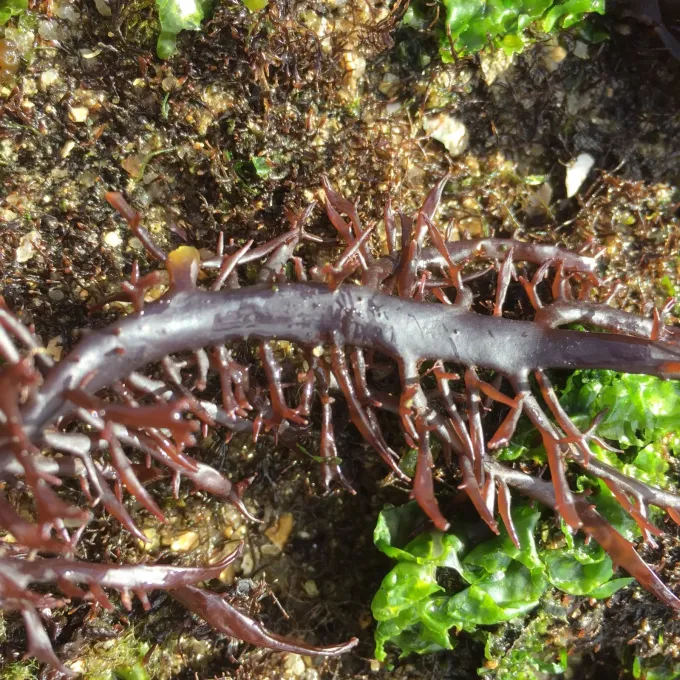
Description
Sowing dates
Chondracanthus chamissoi is a perennial red algae species that is primarily propagated via vegetative methods in aquaculture settings. Planting involves securing fragments of the thallus onto specialized substrates, such as ropes or mesh net structures.
The optimal time for seeding begins in the spring season when water temperatures start to rise consistently. Precise fixation of the fragments is crucial for ensuring survival and subsequent rapid growth of the culture.
The seeding technology often utilizes biodegradable materials to attach algae cuttings to the main suspension lines. This ensures the culture can adapt to currents while maintaining exposure to necessary nutrients.
Preparation of planting material occurs in specialized nurseries where high-yielding strains are selected. This ensures that the biomass used for sea farming possesses strong growth characteristics and high resistance to stress.
Post-seeding monitoring is conducted during the first few weeks to ensure that storm surges or currents do not dislodge the fragments. The species is valued for its robustness, making it an excellent choice for large-scale maritime farming.
Growing requirements
This species thrives in cold to temperate waters with sufficient light exposure, as it relies on photosynthesis. Ideal farming sites are located in coastal zones with active water circulation, providing a constant flow of nutrients.
The ideal temperature range for stable development is between 10 and 18 degrees Celsius. Fluctuations outside this range can lead to slowed metabolic activity or physical degradation of the thallus.
Stable salinity levels are essential for healthy growth, preferably in marine environments without excessive freshwater dilution. Water quality is a critical parameter to prevent the buildup of sedimentation on the algae surface.
The required depth for suspension depends on water transparency, usually ranging from 5 to 7 meters. Ensuring that the substrate remains free from silt or debris is vital for maximizing light absorption and growth rates.
Professional management involves monitoring water parameters such as nitrogen and phosphorus levels. In intensive systems, regulated nutrient supplementation may be applied to boost production rates significantly.
Yield
Yield levels of Chondracanthus chamissoi depend on the density of the substrates and the intensity of water currents. With proper management, it is possible to achieve significant biomass production per linear meter of rope.
The biological life cycle allows for multiple harvesting events per year if proper pruning techniques are employed. Rapid regrowth of the thallus ensures continuous production without the need for constant re-seeding.
Industrial aquaculture yields significantly exceed those obtained from wild harvesting. Controlled farming methods allow for the standardization of size and chemical composition, which is vital for industrial processing.
Optimal light exposure and prevention of competitive biofouling are the key factors for high-yield harvests. The quality of the final product is assessed based on its phycolloid content, which is a major economic driver for this crop.
Agronomists suggest rotating harvesting cycles to allow the mother stock to recover. This ensures the long-term sustainability and profitability of the seaweed farm over multiple production years.
Main diseases and pests
The primary biological threats include epiphytic organisms that compete for space and nutrients. Additionally, small herbivorous mollusks and crustaceans can cause physical damage to the thallus structure.
Environmental changes, such as anomalous water temperature spikes, create conditions favorable for pathogens. These conditions may lead to widespread decay or bleaching of the algal biomass.
Pollution from industrial runoff or excess organic matter can weaken the algae, making it vulnerable to fungal infections. Storm damage often creates wounds in the thallus, facilitating the entry of harmful microorganisms.
Mitigation strategies include regular cleaning of the substrates and visual inspections to detect pests early. Using resilient and selected strains is the most effective approach for preventing disease outbreaks.
Field experts conduct ongoing monitoring of the farm health. If an infection is identified, immediate sanitation and thinning procedures are implemented to prevent the spread of disease across the entire cultivation area.
Harvesting
Harvesting is performed by manually or mechanically cutting the primary sections of the thallus. It is crucial to preserve the basal part of the plant to ensure regeneration for the next growth cycle.
Harvesting occurs when the biomass reaches its peak nutrient concentration, usually during the phase of most active growth. Once harvested, the algae is immediately transported to shore for primary processing.
Primary processing involves thorough washing to remove salt, sand, and small marine organisms. This step is essential to meet strict safety and quality standards for food and cosmetic industry applications.
Drying is conducted in controlled environments or open air with careful temperature management to avoid degrading organic compounds. The final moisture content must be low enough to prevent spoilage during long-term storage.
The dried product is packaged in airtight, moisture-resistant containers for transport to industrial facilities. Rigorous quality control and professional logistics ensure the seaweed maintains its integrity until reaching the final user.