
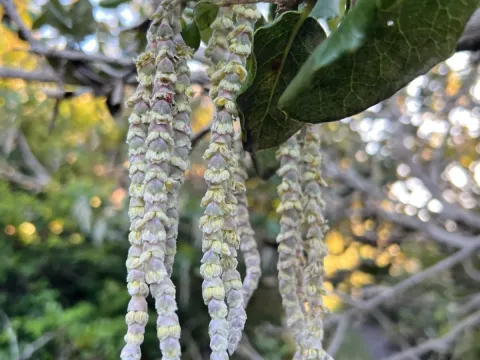
Garrya
Garrya
Propagation of Garrya is typically achieved through seed sowing or stem cuttings. Seeds should be collected when fully ripe and, ideally, sown in autumn to allow for a natural cold stratification process throughout the winter months, which significantly improves germination rates.
What the section contains

Garrya
If seeds are stored, they require a period of artificial cold stratification at approximately 4 degrees Celsius for up to three months. Sowing should be done in a well-draining, sterile potting mix at a shallow depth to ensure adequate oxygen reaches the developing embryo.
Germination is often slow and erratic, requiring patience and a stable, humid environment. Using a propagator or greenhouse conditions helps maintain the necessary moisture levels without saturating the medium, which could lead to seed decay.
For vegetative propagation, semi-hardwood cuttings taken in late summer are the preferred method. These cuttings should be treated with rooting hormone and placed in a medium that provides high aeration, such as a perlite and peat mix.
Once rooted, young plants should be potted into individual containers and grown on in a sheltered location for at least one full season before being transplanted to their final position. This ensures the root system is robust enough to handle environmental stressors.
Garrya is a genus of evergreen shrubs or small trees within the family Garryaceae, notable for their pendulous, silk-like catkins. They thrive best in positions that receive full sun to partial shade, sheltered from harsh, desiccating winds that can damage their foliage.
The soil requirements are specific: the plant demands excellent drainage. Garrya performs poorly in heavy, waterlogged clays, making the incorporation of coarse grit or compost essential in such environments to prevent root rot.
In terms of climate, Garrya species are native to western North America and parts of the Caribbean, preferring mild climates. While some species show moderate frost tolerance, they generally require protection in regions with severe winters to maintain their evergreen display.
Water management is critical during the establishment phase. Once the shrub is well-rooted, it displays considerable drought tolerance; however, supplemental irrigation during prolonged summer dry spells will preserve the plant’s vigor and aesthetic quality.
Maintenance involves light pruning to preserve the natural habit of the shrub. Pruning should occur immediately after the flowering period concludes, ensuring that the plant has sufficient time to produce new growth before the onset of the following winter.
Garrya is generally considered a low-maintenance plant with few serious health issues. The most common threats arise from improper soil moisture management, which frequently leads to Phytophthora root rots in poorly drained substrates.
Aphids are the most frequent insect pest, typically colonizing new, succulent growth and the base of the catkins. While they rarely cause death, they can stunt growth and should be treated with horticultural oils or mild soap sprays if infestation becomes heavy.
In humid or stagnant air conditions, powdery mildew can occur, manifesting as a white dust on the leaves. Promoting airflow through proper spacing of plants and thinning the interior of the canopy are the most effective preventative measures against fungal pathogens.
Scale insects can occasionally infest the branches, causing yellowing of the leaves and premature defoliation. Regular monitoring and physical removal or target-specific treatments are recommended to keep populations in check without disrupting beneficial insects.
Ultimately, a healthy Garrya plant in a site with appropriate soil drainage and adequate airflow will rarely succumb to pests or disease. Providing balanced nutrition and avoiding excessive nitrogen fertilization helps to keep the foliage tough and less attractive to sucking insects.