
Garrya x thuretii
Garrya x thuretii Carrière
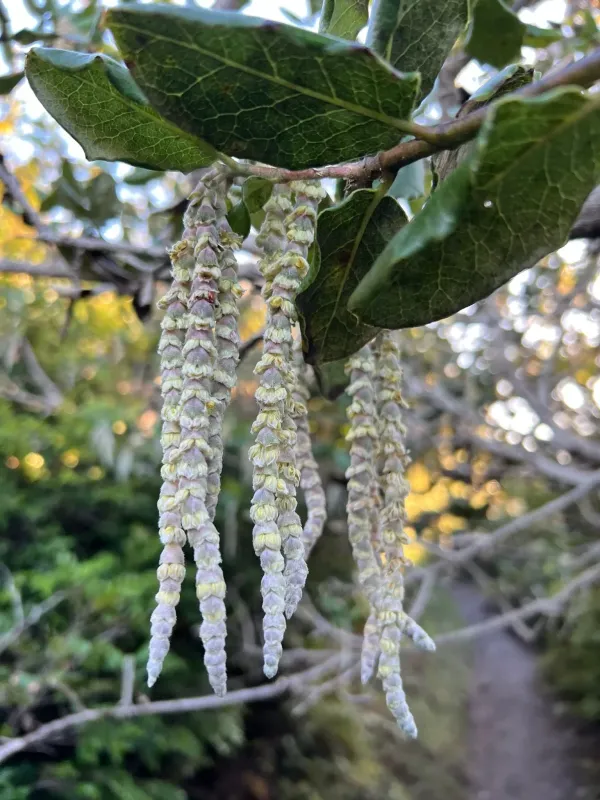
Description
Growing requirements
Garrya x thuretii is a notable interspecific hybrid within the Garryaceae family, valued for its elegant, evergreen foliage and unique aesthetic appeal in garden settings. As a hybrid, it benefits from the hardiness traits of its parent species.
The plant thrives in well-drained, fertile soil, ideally with a neutral to slightly acidic pH. Proper drainage is the most critical factor for its success, as the roots are highly susceptible to rot if water stagnation occurs for prolonged periods.
Optimal environmental conditions include a location that receives full sun to partial shade, sheltered from cold, drying winds. While it is reasonably adaptable, providing a protected microclimate significantly enhances its winter survival rate.
Cultural practices include the application of organic mulch around the base to maintain moisture and soil temperature. Irrigation should be managed carefully, ensuring that the soil remains moist but never waterlogged during the peak growing season.
Maintenance involves seasonal pruning, which should be performed after the flowering period to encourage density and stimulate vigorous branching. This ensures the plant remains compact and visually striking throughout the year.
Main diseases and pests
Fungal infections, particularly root rot, pose the greatest threat to Garrya x thuretii, especially when cultivated in dense or poorly drained soils. Improving aeration is the primary defense strategy against such pathogens.
Common garden pests such as aphids and scale insects may occasionally infest new growth. Vigilant monitoring and the use of insecticidal soaps or systemic treatments can effectively manage these populations before they cause damage.
Cold stress during severe winters can cause dieback on terminal shoots, particularly in younger specimens. Proper site selection and temporary winter wrapping can mitigate these risks in colder growing regions.
Nutrient deficiencies may manifest as leaf discoloration, necessitating a balanced fertilization program. Applying a slow-release granular fertilizer in early spring supports healthy vegetative growth and overall plant vigor.
Crowded plantings often lead to poor air circulation, which creates a favorable environment for diseases. Spacing plants appropriately is essential to maintain a healthy ecosystem and reduce the need for chemical interventions.