
Garrya elliptica
Garrya elliptica Douglas ex Lindl.
Description
Growing requirements
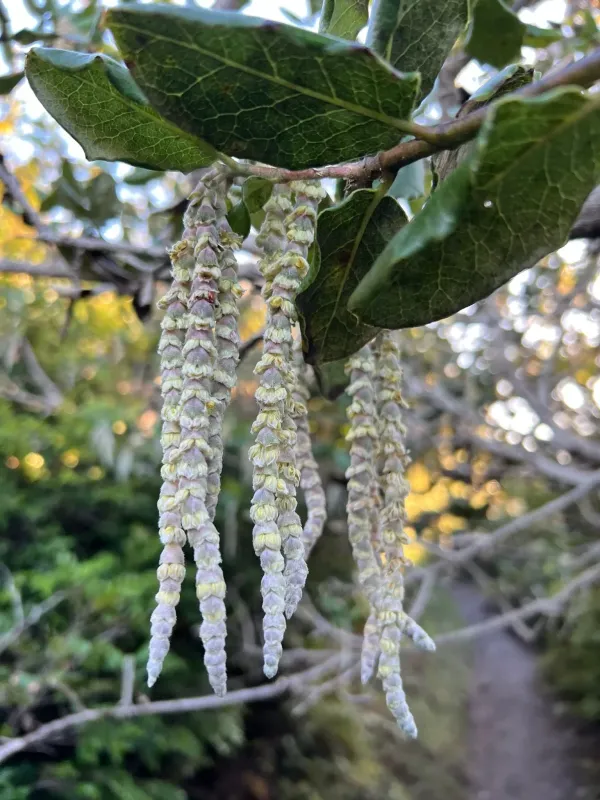
Garrya elliptica, known as the coast silk tassel, belongs to the Garryaceae family. Native to the coastal ranges of Oregon and California, this evergreen shrub is prized for its long, cascading catkins that emerge in late winter.
The plant thrives in well-drained, fertile soil with a neutral to slightly acidic pH. It performs best in temperate climates, showing a preference for mild winters and sheltered locations away from harsh, drying winds.
Sunlight requirements include full sun to partial shade. In its natural habitat, it survives in varied conditions but benefits significantly from moderate protection during the coldest months of the year.
Agrotechnical maintenance involves consistent moisture management, particularly during the first few years after planting. Once established, it demonstrates a moderate level of drought tolerance, though growth is superior with regular irrigation.
Landscape applications include planting against walls for support or as a standalone focal point. Its unique foliage and dramatic winter bloom make it a staple in Mediterranean-style gardens and coastal landscapes.
Main diseases and pests
While generally robust, Garrya elliptica is occasionally susceptible to powdery mildew, especially in regions with high humidity or poor air circulation. Proper spacing between plants is crucial for prevention.
Aphids can infest new growth during the spring, leading to leaf curling. Horticultural oils or mild insecticidal soaps are typically effective in controlling these minor infestations if detected early.
Root rot is the most serious threat, usually resulting from heavy or waterlogged soil. Ensuring perfect drainage at the time of site preparation is the best defense against soil-borne pathogens.
Leaf spot pathogens can occur if the foliage remains wet for prolonged periods. To minimize this, watering should be directed to the soil base rather than over the leaves, and debris should be cleared away.
Regular monitoring and pruning of dead or diseased branches help maintain overall plant vigor. A healthy, well-ventilated shrub is far more resistant to environmental stress and opportunistic pest attacks.