
Fremont's silktassel
Garrya fremontii
Description
Growing requirements
Fremont's silktassel (Garrya fremontii) is an evergreen shrub belonging to the Garryaceae family. It is native to the western regions of North America, typically found in dry slopes and chaparral habitats.
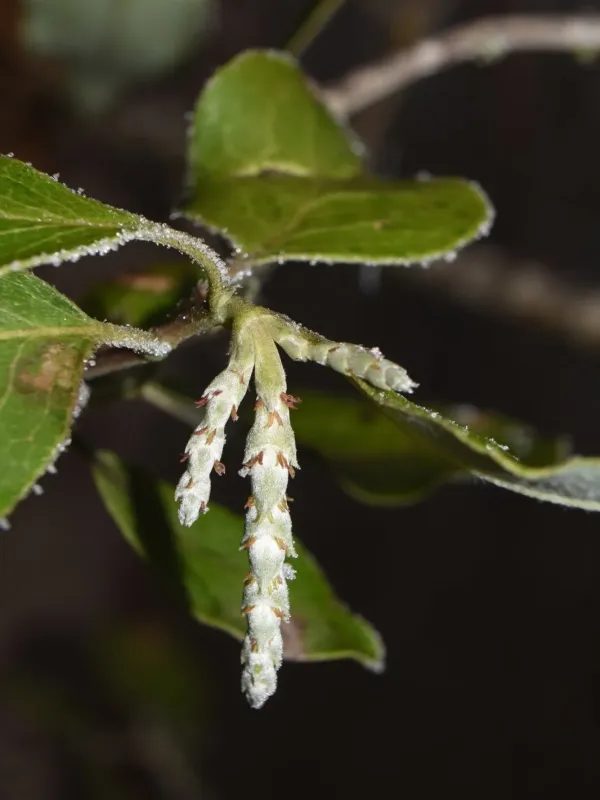
The plant is highly valued for its drought tolerance and architectural beauty, characterized by leathery leaves and long, pendulous catkins that bloom in late winter or early spring.
It thrives in well-drained soils, ideally of a sandy or rocky composition. It does not tolerate heavy clay soils that retain moisture, as this leads to root suffocation and decay.
Regarding climate, it prefers regions with Mediterranean-like conditions. It is relatively hardy but benefits from protection during periods of extreme winter frost or biting winds.
In landscaping, it is used for hedge planting, erosion control on slopes, and as a focal specimen in xeriscaping, providing year-round foliage interest.
Main diseases and pests
Fremont's silktassel is generally resistant to many common pests, but it is susceptible to root rot if planted in poorly drained conditions where water accumulates.
Powdery mildew can occasionally affect the foliage during periods of high humidity and poor air circulation. Proper spacing between shrubs is essential to mitigate this risk.
Scale insects and aphids may occasionally feed on the tender new growth of the plant. Monitoring the underside of leaves and branch junctions is recommended to detect early infestations.
Integrated pest management suggests that physical removal of affected branches is preferred over heavy chemical intervention, especially in residential garden settings.
Maintaining the plant's health through appropriate irrigation schedules—limiting water once the shrub is established—is the most effective way to prevent disease outbreaks.