
Xylia xylocarpa
Xylia xylocarpa (Roxb.) W. Theob.
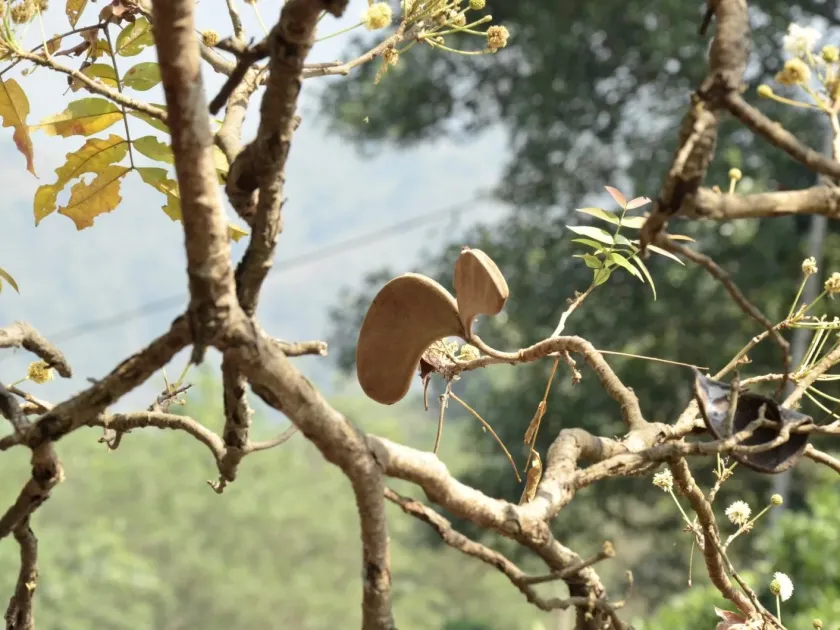
Description
Sowing dates
Sowing of Xylia xylocarpa seeds in nurseries is typically performed at the onset of the rainy season to ensure optimal conditions for seedling establishment.
To accelerate germination rates, seeds are often subjected to pre-treatment, including soaking in warm water for 12 to 24 hours before planting.
Transplanting into the field is carried out once the seedlings reach a height of 30-40 cm, usually after one full growing season in the nursery.
Planting density varies based on forestry goals, but a spacing of 3x3 meters is generally recommended to encourage straight trunk development.
Young plants require weeding and care during the first two to three years of life, as their early growth phase is relatively slow and sensitive to competition.
Growing requirements
This species belongs to the Leguminosae family and thrives in regions characterized by a distinct tropical monsoon climate with a marked dry season.
The plant demonstrates remarkable tolerance to drought, making it an excellent candidate for reforestation projects in arid or degraded landscapes.
Xylia xylocarpa prefers deep, well-drained soils, such as loams or sandy substrates, while avoiding waterlogged or swampy conditions for successful growth.
The species grows optimally at altitudes ranging from 100 to 600 meters above sea level, although it is adaptable to various topographical conditions.
As a light-demanding species, it requires an open canopy or clearings to thrive, as excessive shading significantly inhibits its vertical development.
Yield
The primary economic value of this culture is its timber, widely known as Burmese ironwood, which is prized for its extreme density and structural strength.
The wood is naturally resistant to decay, fungal degradation, and termite infestation, making it highly sought after for demanding construction applications.
Biomass productivity depends heavily on site quality, but under favorable conditions, trees can reach heights of 25-30 meters with a trunk diameter of up to one meter.
Commercial uses include railway sleepers, heavy-duty construction beams, high-end furniture, and durable flooring systems used in various markets.
Beyond timber, the tree functions as an important melliferous species and its bark is a traditional source of tannins used in leather tanning processes.
Main diseases and pests
Xylia xylocarpa in native forests is susceptible to specific stem-boring insects, particularly when trees are stressed by adverse environmental conditions.
Seedlings are highly vulnerable to herbivory by rodents and wild ungulates, requiring protective measures such as fencing or tree guards in young stands.
Fungal diseases affecting the leaves can appear during periods of high humidity and poor air circulation within dense plantations during the monsoon.
Fire risk remains the most significant threat to young plantations during the dry season, as these deciduous forests accumulate significant amounts of dry debris.
- Regular sanitation of plantation sites to remove flammable materials.
- Routine inspections for early signs of bark damage by wood-boring pests.
- Monitoring of foliage for symptoms of fungal leaf spot diseases.
Harvesting
Timber harvesting is a long-term investment, with a rotation cycle ranging from 40 to 60 years depending on the specific diameter requirements.
Technical maturity is determined by the size of the heartwood, which provides the durability and density characteristics essential for its market value.
Logging operations require heavy-duty professional equipment, as the extreme hardness of the wood can cause significant wear on traditional cutting tools.
After felling, the timber must undergo a controlled air-drying process to prevent splitting and checking as the moisture content gradually reaches equilibrium.
Sustainable forest management encourages selective harvesting, focusing on mature individual trees to maintain the forest structure and overall ecosystem health.