
Fontanes broom
Cytisus fontanesii
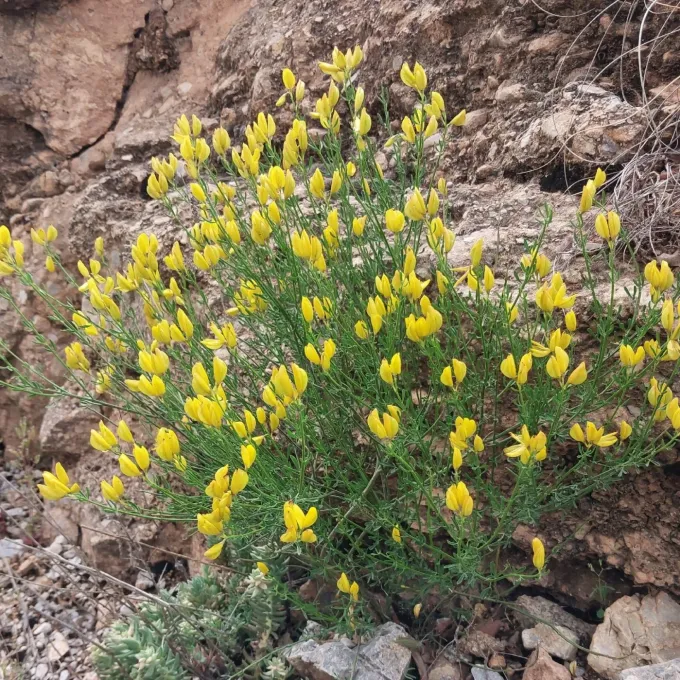
Description
Sowing dates
Seeds of Cytisus fontanesii are typically sown in the spring when soil temperatures reach 15-18 degrees Celsius. Before sowing, seeds should undergo scarification to break their hard coat, which significantly improves germination rates and ensures uniform seedling emergence.
When sowing in open ground, it is important to provide sufficient spacing between plants to accommodate root development. Seeds are usually sown at a shallow depth of 1-2 centimeters, as deeper placement can hinder the emergence of the young sprout.
Using a greenhouse or indoor seed starting method allows for better climate control. This helps protect the delicate seedlings from fluctuating outdoor temperatures and provides a stable environment for their early growth stages.
Once true leaves appear, seedlings are transplanted into individual pots to encourage stronger root system development. This process prevents root tangling and minimizes transplant shock when the shrubs are finally placed in their permanent garden location.
Hardening off the seedlings before planting is essential. Once the threat of frost has passed, usually in late May, the young plants can be safely moved to their permanent spot, ensuring they are well-watered after the process.
Growing requirements
Fontanes broom, belonging to the Fabaceae family, is a sun-loving species that thrives best in full sunlight. Proper exposure to light is crucial for maximizing flower production and maintaining the compact, attractive form of the shrub.
The plant requires well-drained, sandy or gravelly soil to prevent waterlogging around the roots. It is intolerant of heavy, saturated soils, which can quickly lead to root rot and other moisture-related health issues for the plant.
Soil pH should ideally be neutral or slightly acidic. If the garden soil is heavy clay, the addition of organic matter or coarse sand will significantly improve the drainage and aeration necessary for the health of the broom.
While the plant is relatively drought-tolerant once established, it requires regular watering during the first growing season. Consistent moisture helps the roots establish firmly in the soil, which is vital for long-term health and survival.
Annual fertilization with balanced nutrients is recommended, applied early in the growing season. It is vital to avoid excessive nitrogen, as this often leads to rapid vegetative growth that can weaken the structural integrity of the plant.
Main diseases and pests
Fungal diseases, such as powdery mildew and leaf spot, are the primary health threats to Fontanes broom. These diseases are most common in areas with high humidity or poor air circulation within the shrub canopy.
Aphids are the most common pests that affect the succulent new growth of the broom. They can cause deformation of leaves and buds, so regular monitoring is essential to catch infestations before they spread significantly.
Pruning is an effective management tool to minimize disease risks. Removing dead or diseased wood annually helps open the center of the plant to light and air, drastically reducing the environment favorable to pathogens.
Systemic fungicides are recommended when fungal outbreaks occur. Always ensure proper application rates and timing, and consider rotating between different active ingredients to prevent the development of resistant fungal strains.
For pest management, physical removal or localized treatments with insecticidal soap are often sufficient for smaller infestations. If chemical intervention is necessary, opt for products that are selective to protect local pollinators.