
Wright's acacia
Acacia wrightii
Description
Growing requirements
Wright's acacia (Acacia wrightii) is a perennial member of the Fabaceae family, native to the arid landscapes of the southwestern United States and Mexico.
This species is highly valued in arid zone agriculture for its exceptional tolerance to extreme heat and prolonged droughts, thriving where water is scarce.
The tree prefers well-drained, coarse-textured soils and is often found growing in dry washes or rocky slopes, demonstrating significant soil-binding capabilities.
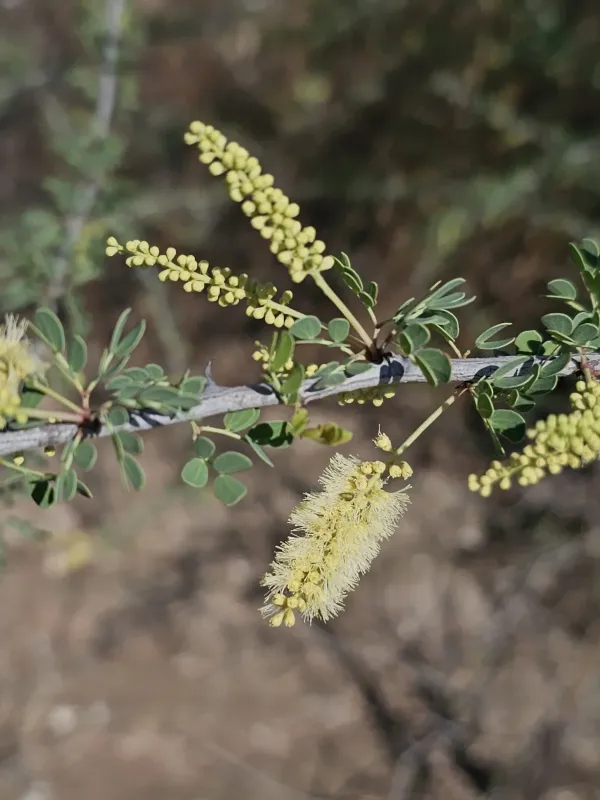
Botanically, it is recognized by its delicate bipinnate foliage and thorny branches, which provide structural protection against foraging herbivores.
In addition to its decorative use in xeriscaping, it serves as an effective nitrogen-fixing plant that enriches soil health in degraded environmental sites.
Main diseases and pests
The primary threat to the long-term health of Acacia wrightii is root rot, which typically occurs due to poor drainage or over-irrigation in landscaping settings.
Insect pests such as wood-boring beetles can affect older or stressed individuals, potentially causing branch dieback if the plant is not properly maintained.
Leaf-feeding insects may temporarily affect the canopy density during peak growing seasons but rarely require chemical intervention in their native habitat.
Overgrazing by wildlife or livestock during the seedling stage is a critical threat that can prevent successful natural regeneration in open range areas.
Proper management requires monitoring for signs of infestation and ensuring that the tree is placed in a site with appropriate sun exposure and drainage.