
Winged wattle
Acacia alata
Description
Growing requirements
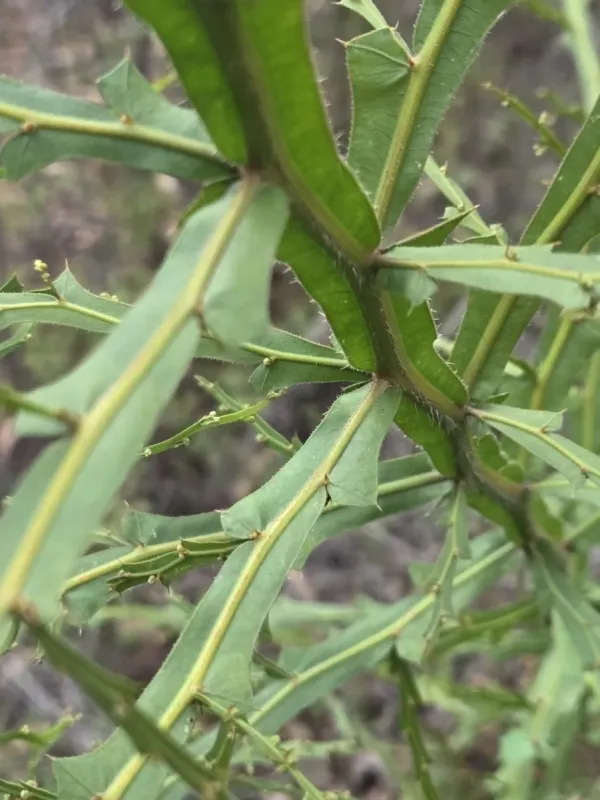
Acacia alata, commonly known as Winged Wattle, is a distinctive shrub belonging to the Fabaceae family. Native to Western Australia, it is characterized by its unique wing-like stems, which act as photosynthetic organs replacing traditional foliage. This adaptation allows the plant to thrive in arid environments with limited water resources.
For successful cultivation, the plant requires extremely well-draining soil, such as sandy or gravelly loam. It is highly intolerant of waterlogging, which often leads to rapid root rot. The soil pH should be slightly acidic to neutral to ensure the plant can efficiently absorb the necessary micronutrients.
The Winged Wattle thrives in full sun, which is essential for maintaining its compact growth habit and vibrant appearance. In environments with insufficient light, the plant tends to become leggy and loses its characteristic structural appeal. It is well-suited to climates with dry summers and moderate winters.
Agricultural management of Acacia alata is relatively low-maintenance. The species is nitrogen-fixing, meaning it does not require significant fertilization and can actually suffer from nutrient burn if high-phosphorus fertilizers are applied. Propagation is typically achieved via seeds, which require boiling water treatment or scarification to improve germination rates.
The primary use of the Winged Wattle is in landscape architecture, particularly for xeriscaping and arid garden displays. Its architectural form makes it a focal point in design, while its hardy nature makes it an excellent choice for stabilizing soil in challenging terrains and contributing to nitrogen replenishment in poor soils.
Main diseases and pests
The most significant threat to Acacia alata is Phytophthora root rot, which occurs when the soil remains too wet for extended periods. Once root rot takes hold, the plant is often impossible to save, emphasizing the need for proper drainage from the start.
Insects such as aphids and scale insects are common pests that may infest the wing-like stems. These pests damage the epidermis and can reduce the aesthetic quality of the shrub. Early detection and the use of targeted systemic insecticides are recommended.
Spider mites can be a problem during extremely hot and dry seasons, causing the plant to lose its deep green color and develop yellow spots. Regular monitoring of the foliage and increasing humidity slightly during extreme heat can help manage these infestations.
Fungal leaf spots can occur if the plant is grown in cramped spaces with poor airflow. Ensuring that the plant has sufficient space around it and is not overcrowded is the best preventative strategy against these types of infections.
In the event of an infestation, it is crucial to prune away severely affected parts to contain the spread. Avoiding excessive watering and high-nitrogen fertilization during recovery is essential for the plant to regain its natural vigor and strength.