
Stuhlmann's acacia
Acacia stuhlmannii
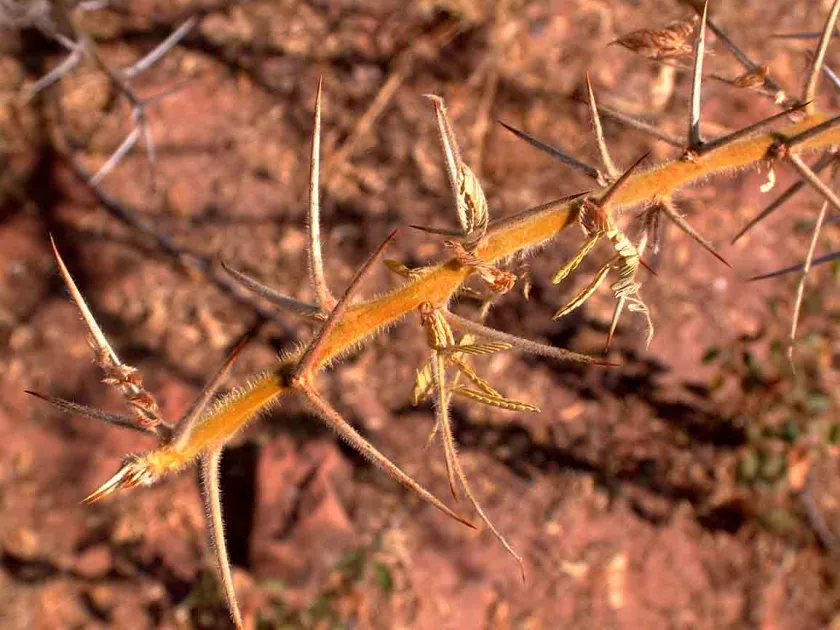
Description
Growing requirements
Stuhlmann's acacia (Acacia stuhlmannii) is a perennial woody plant belonging to the Fabaceae family. It is a resilient species native to the arid and semi-arid regions of East Africa, thriving in challenging savanna environments.
This species is highly adapted to soils with low nutrient content, particularly those that are heavy and clay-rich. Its ability to withstand poor drainage during short rainy seasons makes it a robust candidate for difficult terrain.
The climate requirements for Acacia stuhlmannii center on high heat tolerance and the ability to survive prolonged droughts. It is an essential component of tropical ecosystems where moisture is scarce for most of the year.
Regarding cultivation, the plant is primarily propagated by seeds. To improve germination rates, it is often necessary to scarify the seeds, as they have a hard outer coat that protects them from harsh environmental conditions.
As a legume, this acacia plays a vital role in soil nitrogen fixation. Through a symbiotic relationship with specific soil bacteria, the plant enhances soil fertility, creating a better environment for neighboring flora.
Yield
The primary economic use of Stuhlmann's acacia is as a browse source for livestock and wild herbivores. Its protein-rich foliage provides essential nutrients during the dry season when green forage is unavailable.
The wood produced by this species is dense and durable, making it highly valued for local construction, furniture making, and tool production. Furthermore, it is a preferred source for producing high-quality charcoal.
In agroforestry systems, the plant serves as a living fence. The dense, spiny branches are effective at protecting agricultural crops from encroachment by large herbivores and stray livestock.
Yields of biomass can be optimized through sustainable management practices. Periodic pruning helps in maintaining a manageable tree shape and stimulates the production of lateral shoots, which are the most accessible parts for browsing animals.
The species also contributes to land restoration efforts. By stabilizing soil and reducing wind speed at ground level, it creates a microclimate that benefits other crops and helps prevent topsoil erosion.
Main diseases and pests
The health of Stuhlmann's acacia is primarily threatened by specialized insect pests, including various larvae that feed on tender leaves and shoots, potentially reducing overall growth rates during the growing season.
Root rot caused by fungal pathogens is a significant issue if the soil remains waterlogged for extended periods. As a species adapted to dry conditions, it lacks natural defenses against persistent excessive moisture.
Seed predation is a major biological constraint. Bruchid beetles frequently infest the seeds, significantly lowering the population's ability to regenerate naturally in the wild without human intervention.
Overgrazing presents an anthropogenic threat. If young trees are not protected during their establishment phase, livestock grazing can easily destroy the plantation before the trees reach a self-sustaining height.
Epiphytic parasites, such as mistletoe, frequently colonize mature trees. By extracting sap, these parasites weaken the host plant, making it more susceptible to drought stress and decreasing the overall wood and leaf production.