
Shoestring acacia
Acacia stenophylla
Description
Growing requirements
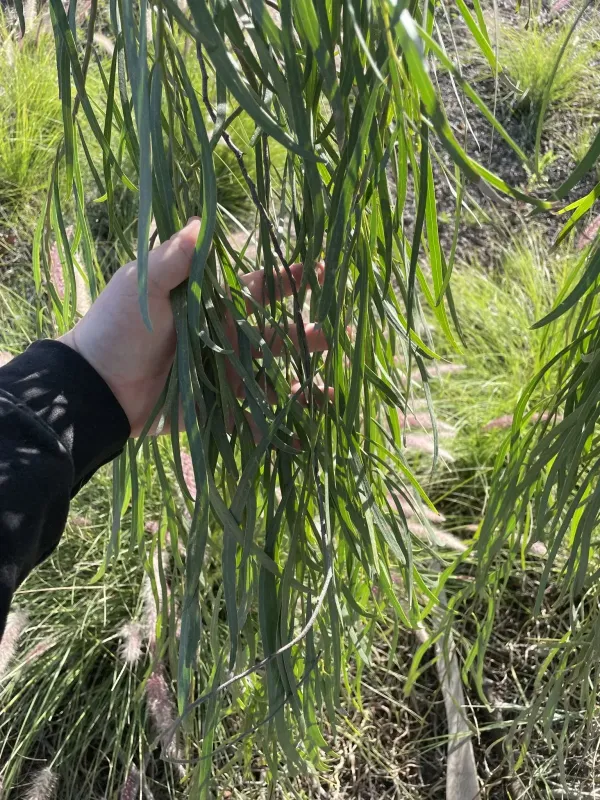
Shoestring acacia (Acacia stenophylla) belongs to the Fabaceae family and is native to inland Australia. It is highly valued for its distinctive narrow, pendulous phyllodes and its immense environmental resilience.
This species thrives in full sun and requires well-drained soil conditions. It is remarkably tolerant of saline soils and can handle both extended drought and occasional inundation near watercourses.
In agricultural settings, it is widely used as a windbreak and for erosion control. Its deep root system helps stabilize soil, making it an excellent choice for land reclamation in arid regions.
The tree reaches a mature height that provides significant shade, which is beneficial for livestock management in open pasture areas located in hot climates.
Adaptation to various soil textures, including heavy clays and rocky terrains, makes it a versatile species for managed forests and sustainable landscape projects.
Main diseases and pests
Common pests include sap-sucking insects like aphids and mealybugs, which are most problematic on young, rapidly growing branches during the spring season.
Root rot caused by Phytophthora species can occur if the plant is grown in waterlogged conditions, making proper soil drainage a critical management priority.
While mature trees are quite hardy, extreme frost can damage foliage and young shoots, limiting the tree's successful range in colder temperate zones.
Mistletoe infestation is a common biological challenge for older trees, which can gradually weaken the overall structural integrity if left unmanaged.
Monitoring the foliage for nutrient deficiencies is important, as high pH levels in the soil can sometimes lead to chlorosis, affecting the overall growth rate of the acacia.