
Shirley's Wattle
Acacia shirleyi
Description
Growing requirements
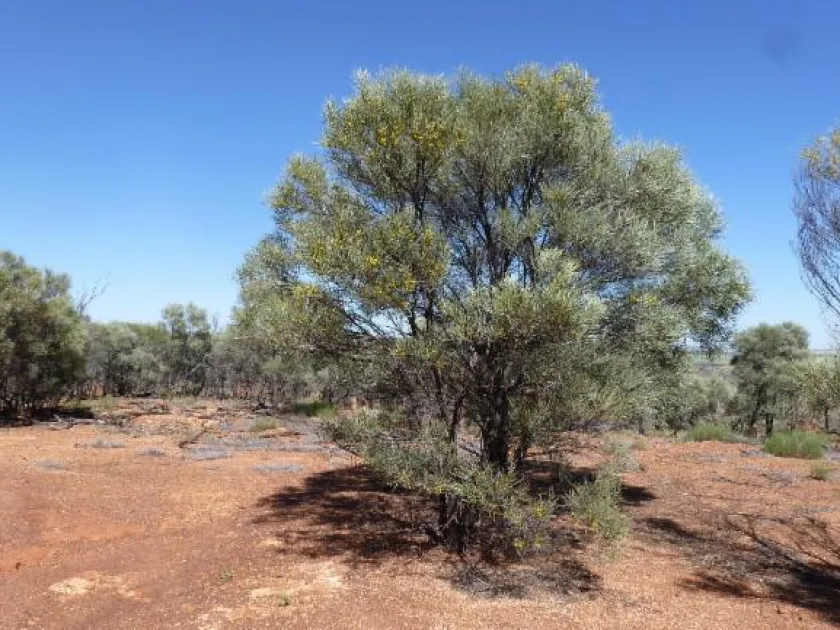
Shirley's Wattle (Acacia shirleyi) is a perennial tree belonging to the Fabaceae family and Mimosoideae subfamily. It is native to the arid and semi-arid regions of Australia, primarily found in the Northern Territory and Queensland.
This species is exceptionally drought-tolerant, adapted to harsh environmental conditions with limited rainfall. It typically thrives in deep, well-drained soils, including sandy loams and skeletal rocky outcrops found across its native range.
Botanically, the tree is characterized by its silver-green phyllodes, which are modified leaf stalks designed to minimize transpiration. The tree can reach heights of 15 meters, showcasing a distinct, often rugged bark texture.
The plant has a symbiotic relationship with nitrogen-fixing bacteria, which allows it to thrive in nutrient-poor soils. This biological trait significantly contributes to soil enrichment and ecological restoration efforts in arid areas.
For successful cultivation, the tree requires full sunlight exposure and excellent soil drainage. It is highly intolerant of waterlogging, which can lead to root diseases and poor plant development, making site selection crucial.
Harvesting
The primary economic value of Acacia shirleyi lies in its timber, which is renowned for its extreme density and natural resistance to termites and rot. This makes it a preferred material for agricultural fence posts and structural timber.
Beyond timber production, the tree serves as an important windbreak and shade provider for livestock in pastoral lands. Sustainable harvesting practices ensure the longevity of these stands while providing essential raw materials for the local industry.