
Waddy-wood
Acacia peuce
Description
Growing requirements
Acacia peuce, commonly known as Waddy-wood or Birdsville wattle, belongs to the Fabaceae family. It is a highly specialized tree species endemic to the arid regions of central Australia.
This species is renowned for its extreme adaptation to desert climates. It thrives in areas with very low annual rainfall and significant temperature fluctuations, representing a biological marvel of evolutionary success.
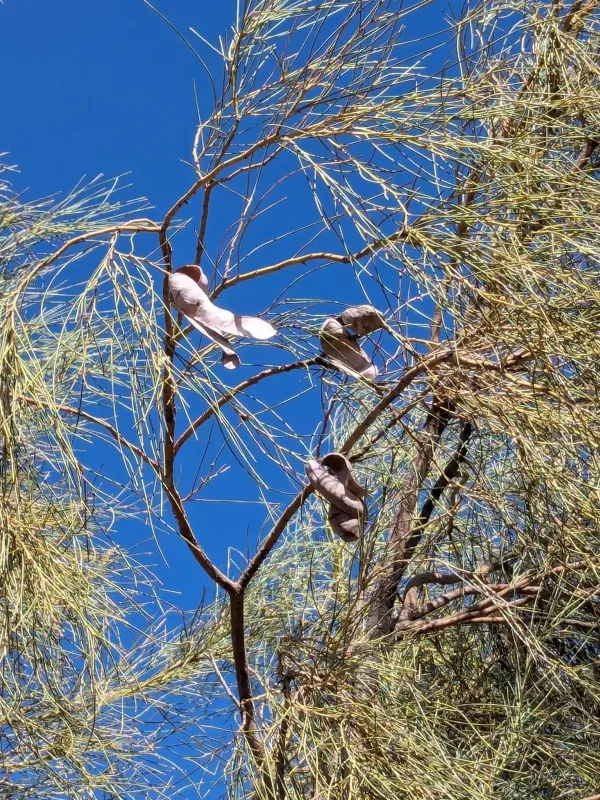
Botanically, the tree exhibits distinct dimorphism in its foliage. Young plants develop dissected, feathery leaves, whereas mature trees produce rigid, needle-like phyllodes to minimize water loss and maximize photosynthetic efficiency under intense solar radiation.
For cultivation, the species demands well-drained, nutrient-poor, sandy or skeletal soils. Waterlogging is the primary risk for this plant; thus, site selection must prioritize excellent soil permeability and aeration.
The economic value of Waddy-wood lies in its remarkably dense and durable timber, which is highly resistant to rot and insect attacks. It serves as an essential resource in arid-zone forestry and land reclamation projects.
Main diseases and pests
Acacia peuce is inherently resilient to most pests, but it remains susceptible to root pathogens like Phytophthora if the soil drainage conditions are not maintained strictly.
Insect infestations, particularly by foliage-feeding caterpillars, can stress juvenile plants, affecting their growth rates during the first few years of establishment.
Termites may pose a threat to the heartwood of older specimens, which necessitates periodic checks when the tree is cultivated near human infrastructure or used for landscape design.
Mechanical damage to the bark by grazing animals is a frequent threat in open field conditions, requiring protective fencing until the tree reaches a sufficient height and bark hardness.
Overall, maintaining the natural balance and avoiding excessive irrigation is the best method to protect the tree from the majority of common agricultural pathogens.