
Acacia macracantha
Acacia macracantha
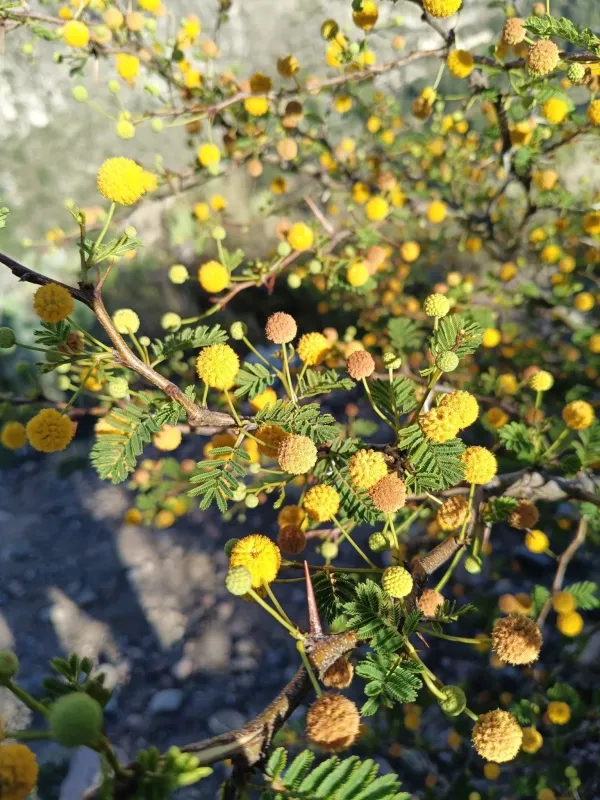
Description
Sowing dates
The propagation of Acacia macracantha is primarily achieved through seeds, which require careful handling due to their physical dormancy.
Seeds possess a hard coat that must be scarified—mechanically or via hot water treatment—to facilitate uniform germination in nursery beds.
Sowing should be timed with the onset of the warm season to ensure that seedlings have sufficient time to establish before cooler temperatures arrive.
Nursery practices involve placing seeds in well-drained medium, ensuring depth is shallow enough to allow consistent moisture for sprouting.
Upon reaching a height of 30-50 centimeters, the seedlings are typically considered ready for outplanting into permanent field sites.
Growing requirements
Acacia macracantha belongs to the Fabaceae family and is recognized as a robust, drought-tolerant species originating from the Americas.
It demonstrates remarkable adaptability to poor soil conditions, thriving in rocky, sandy, and nutrient-depleted substrates where other crops fail.
The species is highly heliophilic, meaning it requires full exposure to sunlight to maintain its structural integrity and developmental speed.
Water requirements are relatively low once the root system is established, as the tree is evolutionary adapted to survive arid environmental conditions.
Temperature range is critical; it is sensitive to severe frost, making it best suited for tropical and warm subtropical agricultural zones.
Yield
The species serves as a valuable source of high-density timber, which is appreciated for its durability and resistance to biological decay.
In silvopastoral systems, the foliage provides a nutritious fodder supplement for livestock, enhancing the overall farm ecosystem productivity.
The plant acts as a biological nitrogen fixer, contributing significantly to soil health and fertility through symbiotic bacteria in its roots.
As a nectar-producing plant, it supports local pollinator populations, which can indirectly boost the yield of neighboring agricultural crops.
The wood yield is considered sustainable under managed harvest regimes that prioritize tree health and long-term land stability.
Main diseases and pests
Boring insects represent the primary pest threat to mature trees, as they can cause significant structural damage to the main trunks.
Root rot, driven by stagnant water and poor drainage, is a common pathological issue that must be managed through correct site selection.
Young plants are susceptible to various fungal pathogens that flourish in high-humidity environments, necessitating good canopy air circulation.
Preventative measures, such as pruning infected branches, are essential to maintain the health and vigor of the entire plantation block.
Ongoing monitoring for signs of infestation is a standard requirement for maintaining the health of an Acacia macracantha field.
Harvesting
Timber harvesting is typically scheduled when the trees reach sufficient maturity to ensure the desired quality and density of the wood.
When utilized for fodder, harvesting should be performed in a way that allows the tree to recover quickly, avoiding excessive branch removal.
Seed harvesting involves collecting the mature pods as they begin to dry on the tree, followed by threshing and proper cleaning processes.
All harvesting operations should employ clean, sharp tools to minimize physical damage and reduce the risk of secondary pathogen infection.
Harvested products, especially timber, require adequate drying and storage conditions to prevent warping or microbial degradation post-harvest.