
Acacia longifolia
Acacia longifolia
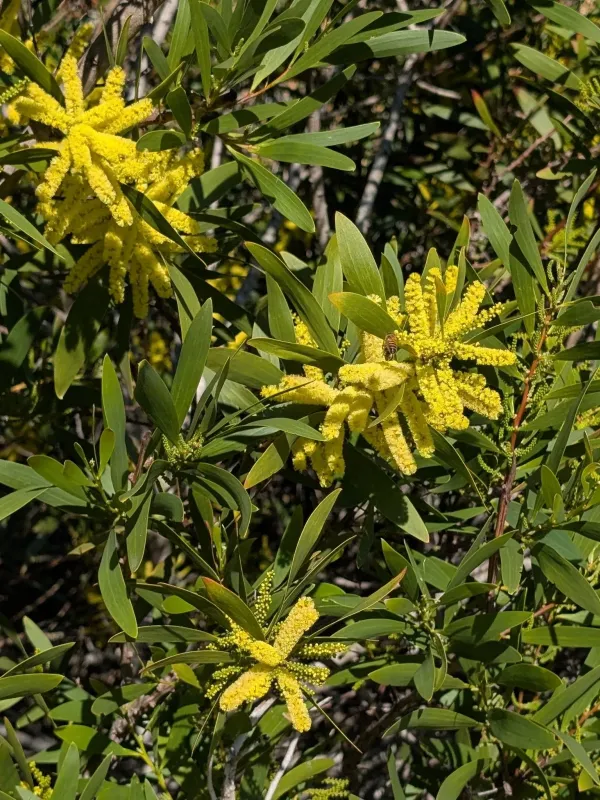
Description
Sowing dates
Acacia longifolia is propagated primarily by seeds. To improve germination, the hard seed coat must be scarified or treated with boiling water followed by soaking for 24 hours.
In regions with a suitable climate, direct sowing is conducted in spring, once the threat of frost has passed and soil temperatures have reached approximately 15-18 degrees Celsius.
For nursery production, seeds are sown in containers using a well-draining substrate. Planting depth is typically kept between 0.5 and 1 centimeter to ensure adequate gas exchange.
Young seedlings require consistent moisture until they are fully established in the ground. Transplanting should be done carefully with the root ball intact to avoid damaging the sensitive root structure.
When planting as a windbreak or hedge, spacing of 2 to 3 meters is recommended to allow sufficient room for the plant to develop its full, dense canopy structure.
Growing requirements
This member of the Fabaceae family is highly valued for its adaptation to poor soil conditions. It thrives in sandy or light loamy soils and is known for its impressive drought tolerance.
The plant requires full sun exposure; shaded conditions lead to reduced flowering and a sparser crown. It does not tolerate waterlogged soils, making proper drainage a prerequisite for health.
Acacia longifolia shows significant tolerance to saline environments, making it an excellent choice for coastal landscape restoration and dune stabilization projects.
The species is climate-sensitive and thrives in mild Mediterranean-type climates. It is not cold-hardy, and in colder regions, it must be grown as a container plant and moved indoors during winter.
Due to its symbiotic relationship with nitrogen-fixing bacteria in its root nodules, it plays a vital role in soil enrichment, making it a key species in revegetating degraded ecosystems.
Main diseases and pests
Root rot caused by fungal pathogens is the most significant threat, particularly if the soil remains excessively wet for long periods. Proper site selection is the best preventative measure.
Common pests include mealybugs and spider mites, which tend to infest tender foliage and shoots, especially in low-humidity environments or during dry spells.
In some non-native habitats, the species can become invasive, spreading rapidly and displacing local vegetation. It is essential to monitor its growth in areas where it is not indigenous.
Certain species of seed-eating weevils can damage the pods, which may negatively impact the availability of viable seeds for harvest and subsequent planting cycles.
Maintaining plant health involves routine sanitary pruning to remove dead or diseased branches and ensuring adequate air circulation through the canopy to discourage fungal growth.