
Red Mulga
Acacia cyperophylla
Description
Growing requirements
Acacia cyperophylla, commonly known as Red Mulga, belongs to the Fabaceae family. This species is native to the arid regions of Australia, where it thrives in extreme environmental conditions.
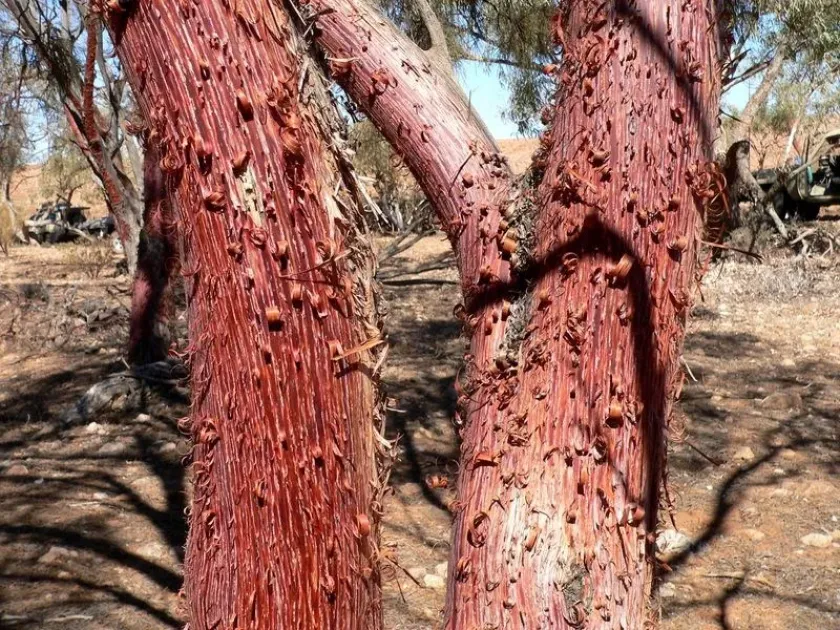
The plant exhibits remarkable adaptation to heat and water scarcity. Its botanical structure features distinctively long, thin phyllodes and reddish bark, which provide protection against harsh sun and desiccation.
Optimal growth requires well-drained soils, typically ranging from sandy to rocky types. The species is highly efficient at nitrogen fixation, which allows it to colonize nutrient-poor sites successfully.
Agricultural management is generally low-input. Due to its drought tolerance, this acacia is an excellent candidate for land rehabilitation projects and stabilizing soils in semi-arid zones.
In terms of economic use, the timber is prized for its high density and tannin content, providing resistance against pests and decay. It is frequently harvested for heavy-duty fencing and small-scale structural timber.
Main diseases and pests
The primary threats include fungal pathogens, particularly root rot, which may develop if the soil remains waterlogged for extended periods. Proper drainage is essential for tree health.
Insect pests, such as leaf-eating caterpillars and wood-boring beetles, can affect the vigor of the trees. These pests usually focus on stressed individuals or young saplings struggling to establish.
Overgrazing by feral livestock and native herbivores poses a severe risk to natural regeneration. Young seedlings are particularly vulnerable to browsing, which can prevent the forest from expanding.
Managing these threats requires establishing protective measures around young plantations and monitoring the site for early signs of infestation or disease outbreak.
While chemical intervention is rarely practiced due to the extensive nature of growth, integrated pest management strategies are applied in forestry nurseries to protect seedlings before they are transplanted into their permanent site.