
Raspberry jam wattle
Acacia acuminata
Description
Growing requirements
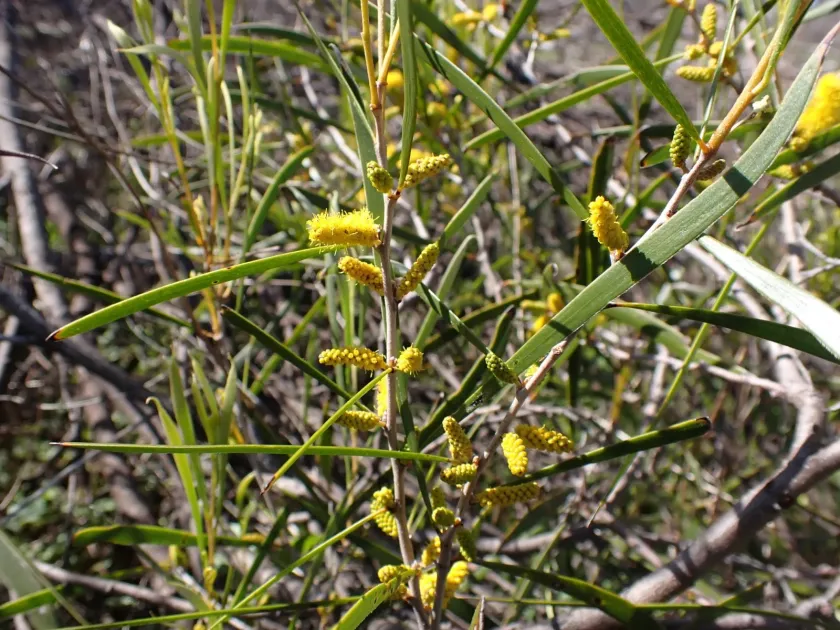
Acacia acuminata, commonly known as the Raspberry jam wattle, is a prominent member of the Fabaceae family. Native to Western Australia, this species is highly adapted to arid and semi-arid environments, making it a valuable crop for land reclamation.
The plant is highly regarded for its ability to fix atmospheric nitrogen, which enhances soil quality and promotes the growth of surrounding vegetation. It thrives best in well-drained, sandy, or rocky soil types where moisture does not accumulate at the root level.
Cultivation requires a Mediterranean climate with significant sun exposure. Its phyllodes, which are flattened leaf stalks, serve as photosynthetic organs, allowing the plant to photosynthesize efficiently while minimizing water loss during intense heat.
The tree grows to an average height of 5–8 meters and possesses a deep, resilient root system. This allows the wattle to survive in extremely harsh conditions where other woody plants would fail to establish themselves.
Its timber is sought after for its durability and pleasant, raspberry-like aroma. Beyond its timber value, it is widely utilized in agroforestry to create windbreaks and provide shelter for wildlife in degraded agricultural areas.
Main diseases and pests
The primary concern for Acacia acuminata growers is root rot, triggered by poorly drained soils or waterlogging. Maintaining dry, well-aerated soil conditions is essential to keep the root system healthy and resilient.
Wood-boring insects can pose a threat to mature trees by creating tunnels within the trunk and branches. These infestations can compromise the structural integrity of the wood and make the tree prone to disease.
Seedlings are highly susceptible to herbivory by rabbits and other wildlife. Protective netting or fencing is usually necessary until the plants are sufficiently established and hardened off to withstand wildlife pressure.
Sucking pests like scale insects or mealybugs can inhabit the phyllodes, drawing nutrients from the plant and potentially stunting its growth if the population remains unchecked for a long duration.
Environmental stressors such as unseasonable frosts or extreme wildfire activity represent significant risks to natural and cultivated stands, potentially resulting in localized population decline if recovery periods are insufficient.