
Tasmanian laurel
Anopterus glandulosus Labill.
Description
Growing requirements
Tasmanian laurel (Anopterus glandulosus) is a distinctive evergreen shrub belonging to the Escalloniaceae family, native to the cool-temperate rainforests and mountain gullies of Tasmania. It is widely recognized for its elegant foliage and botanical uniqueness within its restricted habitat.
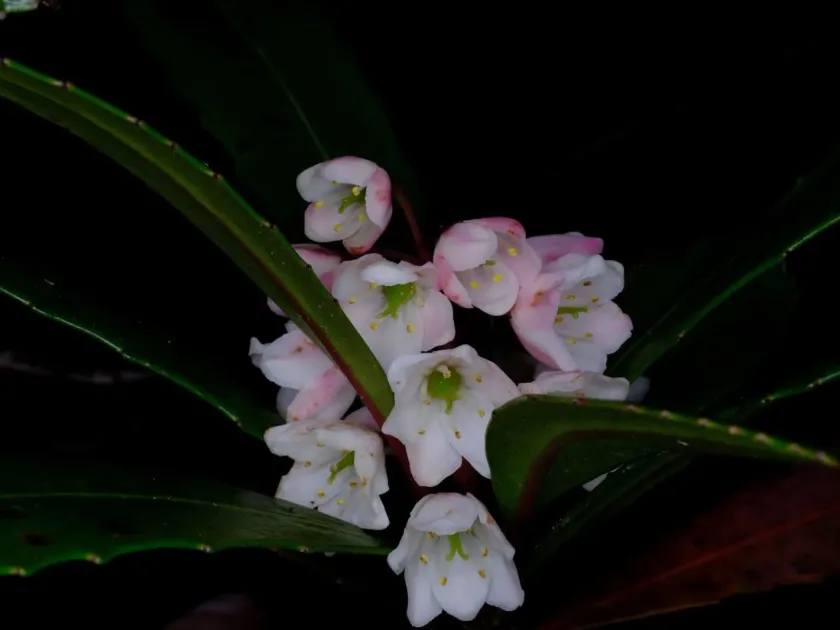
The plant features glossy, serrated leaves that possess small glands at the teeth margins, providing a unique texture. During the flowering stage, it produces pendulous, cup-shaped white to pinkish flowers arranged in terminal racemes that resemble those of the lily-of-the-valley.
Cultivation requires specific environmental conditions, primarily focusing on maintaining high humidity and avoiding extreme temperature spikes. It thrives best in sheltered, semi-shaded positions where it is protected from hot, drying winds and direct afternoon sunlight which can scorch its delicate foliage.
Regarding soil requirements, the species strictly demands an acidic, well-draining substrate rich in organic matter. Gardeners often use mixtures of peat, leaf mold, and sand to mimic the natural forest floor conditions, ensuring that moisture is available without subjecting the root system to waterlogging.
In terms of horticultural use, Anopterus glandulosus is primarily valued as an ornamental specimen in specialized gardens. It is particularly effective when planted in woodland themes or deep border areas, providing architectural structure and seasonal interest through its unique floral displays.