
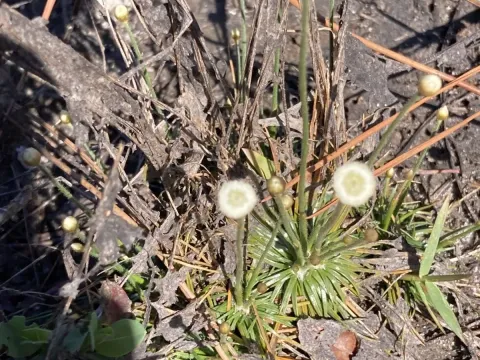
Syngonanthus
Syngonanthus Ruhland
Syngonanthus is a genus of perennial herbaceous plants belonging to the Eriocaulaceae family, widely distributed across tropical regions, especially in South America.
What the section contains

Syngonanthus
The propagation process is highly dependent on light levels and humidity, as the seeds are dust-like and require precise environmental conditions to trigger germination.
Successful sowing involves placing seeds on a moist, acidic substrate surface and providing continuous warmth in the range of 24°C to 28°C for optimal results.
Seedlings are extremely sensitive during the initial stages and require a stable microclimate to develop a robust root system before being transitioned to larger containers.
Maintaining a gentle airflow while preventing the substrate from drying out is essential during the critical phase of plant establishment.
Cultivating Syngonanthus demands strict attention to water quality, specifically preferring soft, slightly acidic water with a pH between 5.0 and 6.5 for healthy growth.
Light intensity plays a pivotal role in the morphology of the plant; higher light levels generally result in compact and vibrant leaf rosettes in most known species.
The substrate or growth medium must be well-aerated to ensure gas exchange, as roots are prone to suffocation in compacted or nutrient-rich soil environments.
Regular fertilization with trace elements, especially iron and manganese, is necessary to prevent yellowing of the foliage and ensure steady physiological development.
Temperature fluctuations should be minimized, as the genus has adapted to stable tropical climates where radical shifts in temperature are rarely experienced.
The most significant threat to Syngonanthus is the development of fungal infections caused by excessive moisture and poor air circulation in the growing area.
Environmental stress, such as sudden changes in light intensity or water chemistry, can lead to the rapid deterioration of the plant's structural integrity.
Common pests like spider mites or nematodes can cause severe damage, targeting the delicate tissues of the leaves and leading to irreversible growth stunting.
Over-fertilization frequently leads to the accumulation of toxic salts, which can cause severe burning of the roots and eventual death of the entire plant specimen.
Effective management includes routine maintenance, removing decaying foliage promptly, and ensuring the growth medium remains clean and free of organic buildup.