
Golden Syngonanthus
Syngonanthus chrysanthus (Bong.) Ruhland
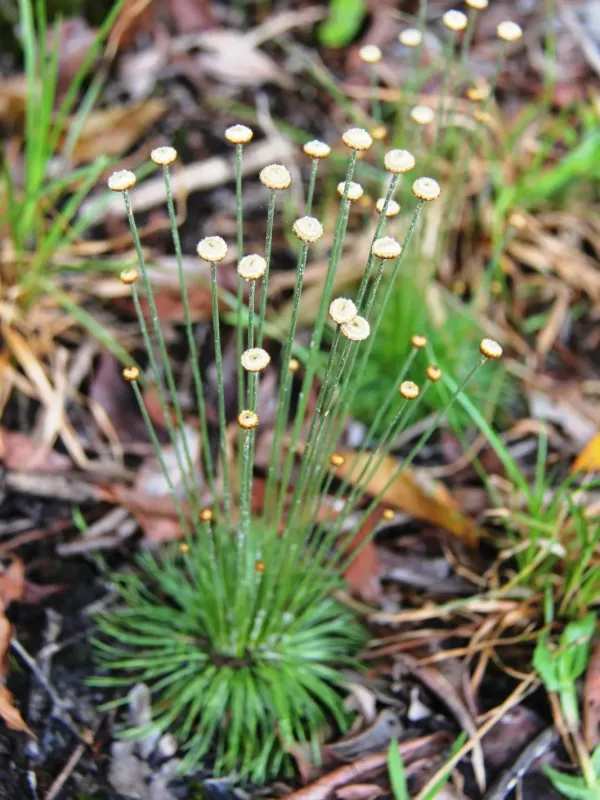
Description
Sowing dates
The sowing of Golden Syngonanthus seeds requires controlled greenhouse conditions, as the species is highly sensitive to environmental fluctuations during its early developmental stages. The ideal time for sowing is early spring to ensure the seedlings benefit from the increasing photoperiod.
Seeds are sown on the surface of a sterile, peat-based substrate and should not be covered with soil, as light is a physiological requirement for germination. Proper surface contact with the moist medium is essential to ensure moisture absorption.
Maintaining high relative humidity, ideally between 90 and 100 percent, is critical during the initial germination phase. Utilizing clear plastic covers or specialized germination chambers helps create an stable microclimate that prevents the seeds from drying out.
The optimal temperature for germination is between 22 and 25 degrees Celsius. Consistent warmth is necessary to stimulate metabolic processes, while cold stress can lead to delayed emergence or significant seedling mortality.
Once true leaves appear, ventilation should be gradually increased to harden the young plants. Transplantation to individual containers should be done carefully to avoid damaging the fine, fibrous root system typical of the Eriocaulaceae family.
Growing requirements
Golden Syngonanthus, belonging to the Eriocaulaceae family, naturally occurs in the seasonally wet grasslands of Brazil. In agricultural practice, it requires highly acidic soils with a pH ranging from 4.5 to 5.5, reflecting its native habitat preferences.
The crop thrives under bright, filtered light. While it requires high solar energy for growth, direct high-intensity noon sun can cause tissue damage and leaf chlorosis, necessitating the use of shading cloths in greenhouse settings.
Water quality is of paramount importance; the species is sensitive to mineral salts found in standard tap water. Using distilled, reverse osmosis, or rainwater is mandatory to prevent the accumulation of salts that can scorch the delicate roots.
The plant requires high ambient humidity throughout its life cycle. In industrial production, automated misting systems are often used to maintain the necessary atmospheric moisture levels without saturating the soil to the point of hypoxia.
Soil structure must be porous and well-draining, preventing waterlogging, which is the primary cause of root failure. A mixture of peat, perlite, and fine sand provides the necessary aeration while retaining essential moisture.
Main diseases and pests
Fungal infections, particularly those affecting the roots, are the most common threat. These usually manifest in waterlogged or overly dense substrates where oxygen availability to the root zone is severely restricted, leading to rapid necrosis.
Spider mites are a persistent pest in greenhouse cultivation, especially when humidity levels drop below optimal thresholds. Regular scouting and preventative biological controls are recommended to maintain plant health.
Bacterial leaf spot can occur if water remains trapped in the leaf axils for extended periods, creating an environment conducive to pathogen proliferation. Promoting better air circulation is the most effective management strategy.
Chlorosis and marginal leaf burn are often non-pathogenic issues resulting from high substrate salinity or improper pH. Regular monitoring of the drainage water chemistry is essential to detect and correct these issues early.
- Rhizoctonia root rot
- Spider mites (Tetranychidae)
- Bacterial leaf blight
- Nutrient imbalance due to water quality
Harvesting
The harvest of Golden Syngonanthus is timed to coincide with the full maturity of the golden inflorescences. For commercial floriculture, the harvest is performed when the flower heads have developed their characteristic deep gold color and firm structure.
Clipping is best done in the early morning to ensure maximum turgor pressure within the stems, which aids in preserving the plant's structural integrity post-harvest. The stems must be handled with care to prevent bruising the delicate golden heads.
Drying is a critical post-harvest step, requiring a dark, well-ventilated space maintained at temperatures below 30 degrees Celsius. Slow drying prevents the stems from snapping and preserves the vibrant color of the inflorescences.
As a valued dried flower, Syngonanthus chrysanthus is a staple in high-end floral arrangements. Its ability to retain its form and color for extended periods makes it a high-demand commodity in international floristry markets.
Quality control during harvest involves grading based on stem length and inflorescence density. Uniform batches with clean, undamaged heads fetch a premium price, emphasizing the importance of precise harvesting techniques.