
Milk rhododendron
Rhododendron lacteum
Description
Growing requirements
Rhododendron lacteum, commonly known as the milk rhododendron, is a magnificent evergreen shrub belonging to the Ericaceae family. Known for its robust growth and impressive foliage, it can develop into a small tree under optimal environmental conditions in its native habitat.
The species originates from the high-altitude mountains of Southwest China, particularly in Yunnan province. It thrives in alpine climates, typically found at elevations between 3,000 and 4,000 meters, where cool temperatures and high humidity are constant throughout the growing season.
Successful cultivation requires a location with partial shade, sheltered from harsh winds and intense mid-day sunlight. The soil must be acidic, highly porous, and rich in organic matter, mimicking the forest floor conditions found in its natural range.
Agrotechnical maintenance focuses on consistent moisture and acidity management. It is recommended to apply a thick layer of pine needle mulch to keep the roots cool and acidic, avoiding any deep cultivation that might disturb the shallow root system.
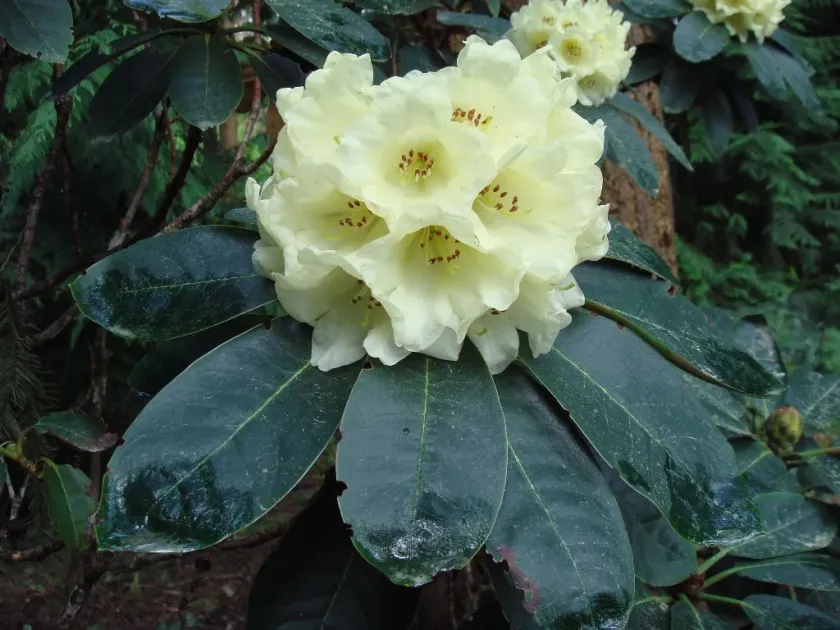
In landscape architecture, the milk rhododendron is prized as a focal point in woodland gardens. Its large, ball-shaped trusses of milky-white or creamy flowers provide an elegant display during the spring bloom, making it a highly desirable species for collectors.
Main diseases and pests
Phytophthora root rot remains the most significant threat to Rhododendron lacteum. This pathogen thrives in waterlogged, poorly drained soils, making adequate drainage the primary defense mechanism against fatal crown and root degradation.
Nutritional deficiencies often occur when the soil pH rises above the optimal range for ericaceous plants. Iron and magnesium deficiency manifest as interveinal chlorosis, which requires immediate soil acidification and specialized fertilizer application to correct.
Pests such as rhododendron bugs, spider mites, and weevils can cause significant aesthetic and physiological damage. These insects feed on sap or foliage, resulting in mottling, stunted growth, and a general decline in the plant's health.
Integrated pest management strategies should be employed to control infestations. This includes the use of horticultural oils, specific miticides, and systemic insecticides that provide long-term protection during the peak pest activity period.
Good cultural practice is the foundation of disease resistance. Ensuring sufficient airflow between individual shrubs and removing fallen leaf debris helps reduce the spread of fungal spores and minimizes the living environment for harmful pests.