
Ceratostema rauhii
Ceratostema rauhii
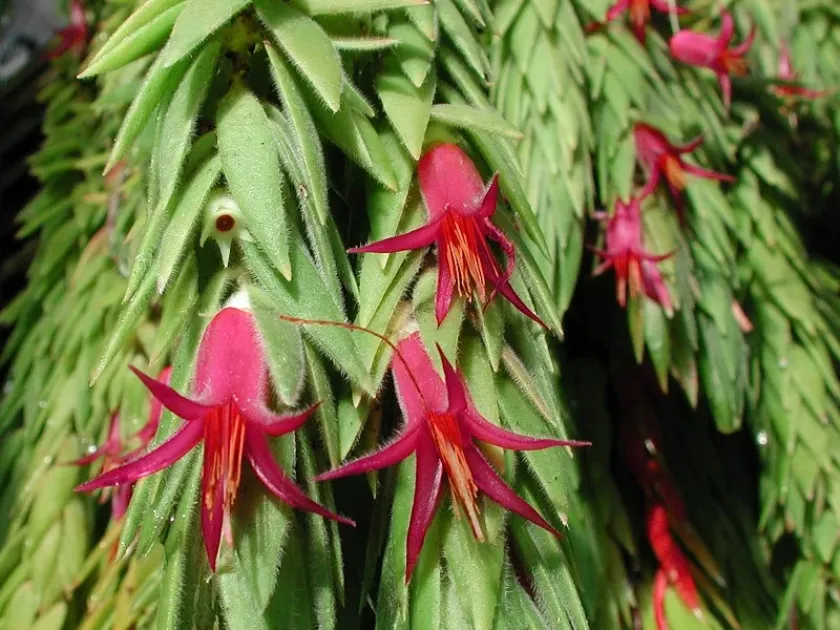
Description
Growing requirements
Ceratostema rauhii is a distinctive species within the Ericaceae family, native to the high-altitude cloud forests of Peru. As a specialized epiphyte, it has evolved unique physiological adaptations to survive in nutrient-poor and high-humidity environments.
Botanically, the plant is characterized by its woody, often succulent-like stems that act as reservoirs for moisture. Its foliage is thick and leathery, an adaptation that allows it to retain water efficiently during periods of fluctuating atmospheric moisture.
Cultivation requires strict adherence to environmental conditions resembling its native habitat. A high relative humidity, ideally above 70%, is essential for the plant to thrive, often necessitating the use of specialized misting systems or greenhouse environments.
The substrate must be highly porous to ensure adequate oxygen circulation around the root system. A blend comprising pine bark, perlite, and long-fiber sphagnum moss provides the necessary aeration and moisture retention that this epiphytic species demands.
Light intensity should be bright but filtered. In a controlled cultivation setting, providing indirect morning light is ideal, while intense midday sun must be avoided to prevent thermal stress and foliar burn, which can be irreversible for this slow-growing plant.
Main diseases and pests
The primary concern for Ceratostema rauhii is the development of root and stem rot caused by improper drainage or an overly dense growing medium that retains excessive moisture.
Pest pressures primarily include scale insects and spider mites, which can easily infest the dense foliage if the environment becomes too dry or if ventilation is insufficient in the growth area.
If an infestation occurs, it is recommended to manage it using gentle, soap-based treatments rather than harsh chemicals, as the plant's delicate root and stem systems may react negatively to systemic pesticides.
Proper sanitation, including the removal of dead or decaying organic matter from the pot surface, is crucial to prevent the spread of fungal pathogens that often plague high-humidity greenhouse plants.
Monitoring the moisture level of the substrate is the most effective preventative measure; the media should remain consistently damp but never waterlogged to ensure the plant's long-term health and vigor.