
Variegated horsetail
Equisetum variegatum
Description
Growing requirements
Variegated horsetail (Equisetum variegatum) is a perennial, spore-bearing plant belonging to the Equisetaceae family. This species is native to northern temperate and arctic regions, thriving in damp environments such as riverbanks, wet sands, and marshy habitats.
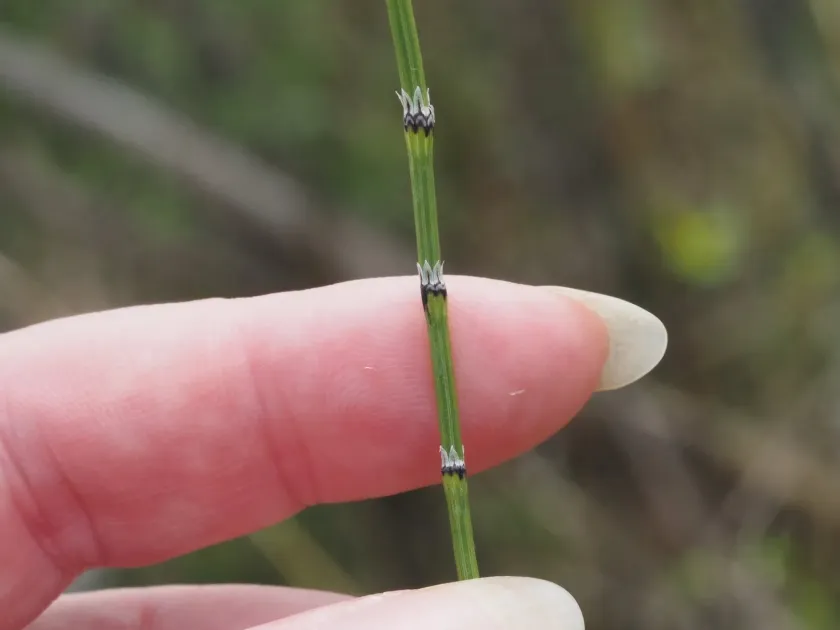
The plant is characterized by its slender, dark green stems with distinct white-margined sheaths. It forms dense colonies, making it an excellent choice for stabilizing moist soils and creating textured elements in garden designs near water features.
In terms of climate requirements, the plant is extremely resilient to cold, which makes it suitable for diverse geographic areas. It requires full sun or partial shade and consistently moist to waterlogged soil conditions to flourish.
Soil composition should ideally be sandy or silty, mimicking its natural habitat. While it adapts well to various soil pH levels, it performs best in neutral to slightly acidic environments with minimal competition from faster-growing vegetation.
Maintenance involves managing its spreading habit. Due to its rhizomatous growth, it is recommended to use root containers or physical barriers if you wish to restrict the plant to a specific area of your garden or site.
Main diseases and pests
Variegated horsetail is a remarkably robust plant, showing high resistance to most typical agricultural pests that affect flowering crops. Its high silica content in the cell walls makes it unappealing to many herbivorous insects.
Fungal diseases are rare but can occur under conditions of extremely poor air circulation or stagnant water that becomes contaminated. Proper spacing between individual plants helps mitigate the risk of surface infections.
Occasionally, aphids may appear on the tender new growth during the spring, though they rarely cause significant economic damage to the plant. Monitoring and manual removal are usually sufficient for control.
The most significant threat to the crop is competition from invasive weeds or other aggressive wetland species that may outcompete it for light and nutrients. Regular weeding is necessary during the establishment phase.
As a non-traditional crop, it does not require heavy pesticide applications, which makes it a sustainable choice for environmentally conscious landscape management. Maintaining proper water quality is the primary key to its health.