
Giant horsetail
Equisetum giganteum
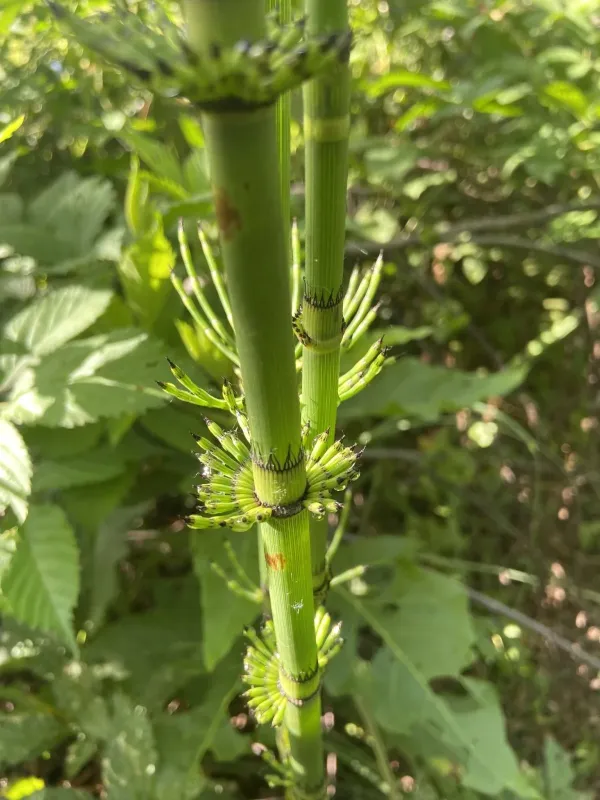
Description
Growing requirements
The giant horsetail (Equisetum giganteum) is a member of the Equisetaceae family. It is a perennial plant known for its striking vertical stems that can grow exceptionally tall, sometimes reaching several meters in its native habitat.
Originating from the tropical and subtropical zones of Central and South America, this plant is naturally adapted to wetlands, riverbanks, and marshy environments where water is abundant throughout the year.
To cultivate this species successfully, one must provide nutrient-rich, moist, and well-drained soils. The plant thrives in environments that mimic its natural swampy surroundings, requiring consistent moisture at the root level.
The climate requirements are strictly tropical or warm-temperate. It lacks cold hardiness and cannot survive freezing temperatures, necessitating the use of greenhouses or controlled environments in cooler regions.
Light exposure should be managed carefully. The plant prefers bright but filtered light, as the high intensity of direct sunlight in open areas can lead to tissue dehydration and browning of the delicate aerial stems.
Harvesting
The primary agricultural and horticultural use of the giant horsetail is for ornamental purposes. Its unique, bamboo-like structure makes it a popular choice for water feature landscaping and garden design.
From an industrial perspective, the stems contain high levels of silica, which has historically been utilized for abrasive purposes, polishing, and cleaning, owing to the hardness of the epidermal cells.
Harvesting involves cutting the mature stems while ensuring that the rhizome system remains undamaged. This practice is essential to maintain the long-term vitality of the patch and allow for seasonal regrowth.
The harvested material should be dried in a shaded, well-ventilated area to preserve the integrity of the silica-rich stems. Controlled drying ensures that the stems do not lose their flexibility or structural rigidity.
Management of the plantation includes regular thinning of older, less productive stems. This cultural practice encourages the emergence of fresh, vigorous shoots and prevents overcrowding, which could lead to fungal issues.