
Branched horsetail
Equisetum ramosissimum
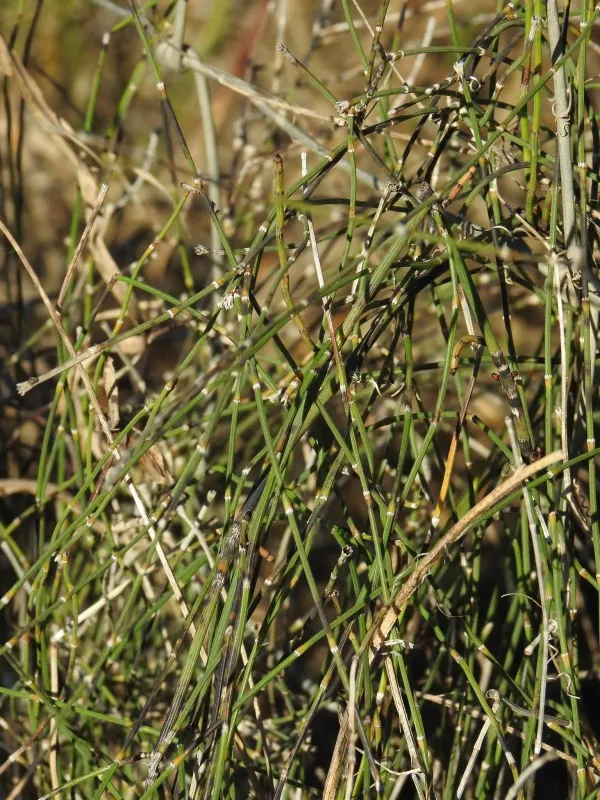
Description
Growing requirements
Branched horsetail is a perennial herbaceous plant belonging to the Equisetaceae family. It is characterized by a significant underground rhizome system that allows for rapid vegetative propagation, making it a resilient species in diverse habitats.
The plant thrives primarily in sandy and loamy soils, commonly appearing in riparian zones, riverbanks, and open slopes. It displays high tolerance to fluctuating water tables and can adapt to soil conditions with moderate salinity, often colonizing disturbed sites.
Agronomically, it is frequently classified as a persistent weed due to its aggressive growth pattern. Optimal development requires high solar radiation levels, as it is unable to compete effectively in shaded forest environments or beneath dense canopies.
Field management strategies rely on rigorous mechanical tillage to disrupt and deplete the rhizome networks. Drainage improvements in overly moist agricultural sections also prove effective in reducing the prevalence of this species within cultivated fields.
While often viewed as a nuisance, the plant contains significant concentrations of silica and various phytochemicals, which contribute to its potential use in pharmaceutical and traditional medicine sectors as a natural raw material source.
Main diseases and pests
Branched horsetail exhibits strong natural resistance to most common crop pathogens. The rigid cell walls, fortified by high silica deposition, provide a physical barrier that discourages most insect feeding and fungal colonization.
Specific rust diseases may occasionally affect the plant in highly favorable environmental conditions, causing localized tissue necrosis. However, these rarely result in total population loss or significant agricultural damage to surrounding crops.
Intense competition from vigorous grasses and woody perennials is a major natural deterrent for the species. Shade suppression is the most effective biological means to limit its expansion, as it drastically reduces the carbon gain through photosynthesis.
Chemical control programs often necessitate systemic herbicides due to the plant's waxy, protective cuticle. Standard contact pesticides are usually ineffective, requiring surfactants or specific formulations to penetrate the epidermis and reach the vascular system.
Integrated pest management (IPM) practices, including precise crop rotation and intensive mechanical cultivation, remain the gold standard for controlling branched horsetail. Consistent soil turning prevents the rhizomes from re-establishing dominance in the field.