
White Bat Plant
Tacca integrifolia Ker Gawl.
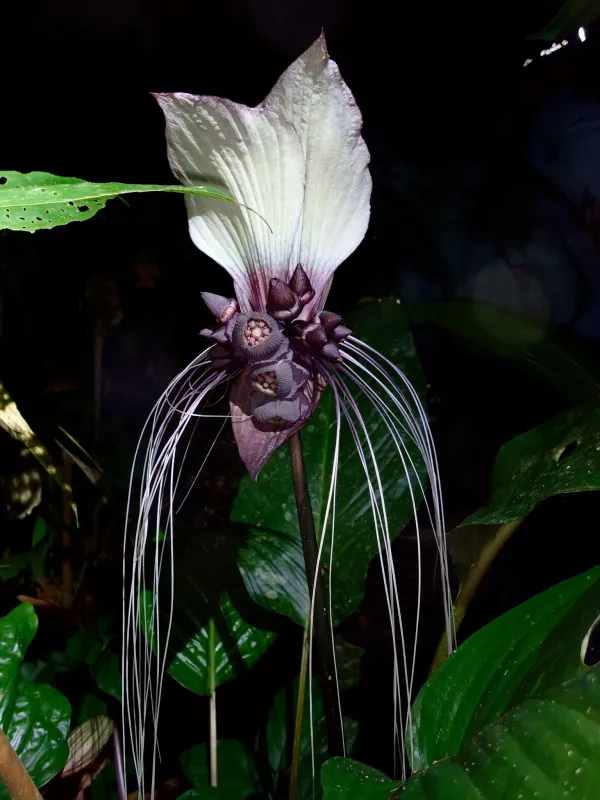
Description
Sowing dates
Propagating the White Bat Plant from seeds is a challenging task due to their naturally low germination rate. Before sowing, it is recommended to soak the seeds in warm water for 24 hours to help soften the seed coat.
The seeds should be planted in a light, well-draining soil mix rich in organic matter. Maintaining a constant bottom heat of 25-28 degrees Celsius is essential to encourage the seeds to sprout effectively in a humid environment.
Germination can be a slow process, sometimes taking several months, so patience is key. Providing a stable environment with consistent humidity levels inside a plastic propagation dome or greenhouse will significantly increase success rates.
Alternatively, the plant can be propagated by dividing its rhizomes during repotting. This method is generally more reliable and faster than growing from seeds, especially for indoor gardeners who want to ensure plant vitality.
When dividing, ensure each segment has healthy root growth and at least one growth point. Dusting the cut surfaces with sulfur or charcoal powder is a vital step to prevent rot and promote quick healing of the plant tissue.
Growing requirements
Tacca integrifolia thrives in conditions that mimic the tropical understory, requiring high humidity levels above 70%. It is highly sensitive to dry air, which causes leaf margins to curl and turn brown very quickly.
The plant prefers bright, indirect light and must be protected from direct sunlight at all times. Placing it in a spot with filtered light, such as behind a sheer curtain, ensures vibrant leaf color and healthy flower development.
Soil quality is paramount; the plant requires a loose, aerated, and slightly acidic potting mix. A blend containing peat moss, pine bark, and perlite provides the necessary structure to keep the rhizomes healthy and oxygenated.
Temperatures should be consistently warm, ideally between 22 and 26 degrees Celsius during the day. Keeping the plant away from drafty windows or air conditioning vents is crucial to preventing environmental stress and leaf drop.
Watering must be done carefully to keep the soil moist but never waterlogged. Always use room-temperature water, as cold water can shock the plant's sensitive root system and hinder its overall growth performance.
Main diseases and pests
Spider mites are the most frequent pests, especially when the indoor humidity levels drop too low. Inspecting the undersides of the foliage regularly allows for early detection and treatment before an infestation spreads.
Root rot is a major threat caused by poor drainage or overwatering the plant. Providing an excellent drainage system and allowing the top inch of soil to dry slightly between waterings is the best way to prevent damage.
Mealybugs can often be found hiding in the leaf axils, draining nutrients from the plant. Manual removal with an alcohol-dipped swab, followed by insecticidal soap application, is usually sufficient to handle minor outbreaks.
Leaf spot diseases, often caused by fungi, can occur if there is inadequate airflow around the foliage. Ensuring proper spacing between plants and maintaining a clean environment helps to mitigate the risk of these infections.
- Maintain high ambient humidity.
- Use well-draining, loose soil mixtures.
- Isolate new plants to monitor for pests.
- Ensure good air circulation without drafts.