
Tacca chantrieri
Tacca chantrieri André
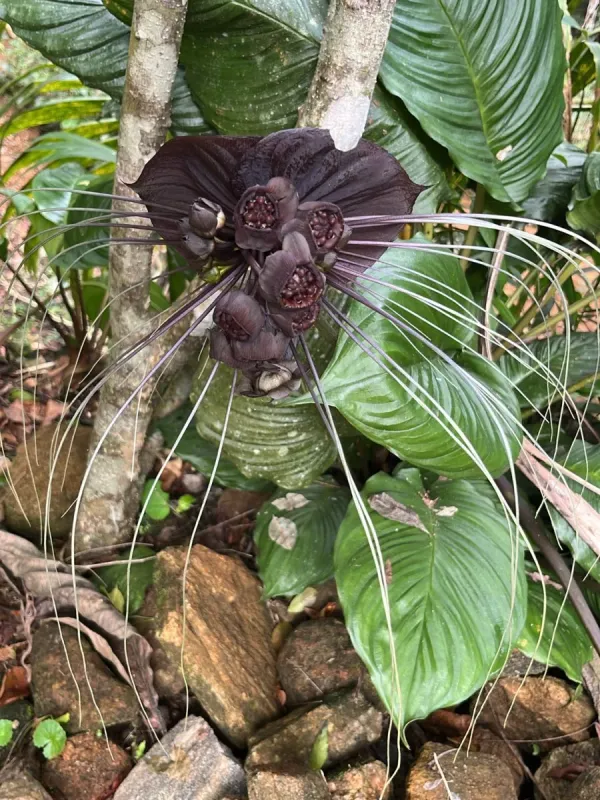
Description
Sowing dates
Tacca chantrieri is propagated through seeds or division of the rhizome. Seeds require pre-soaking in warm water for 24 hours to soften the hard outer coat and improve germination rates.
Sow seeds in a well-draining, peat-based potting mix. Keep the container in a warm environment, ideally between 25°C and 30°C, as the seeds are highly sensitive to temperature fluctuations.
Germination is an slow process that can take several months. It is critical to maintain consistent soil moisture throughout this period without waterlogging the substrate.
Vegetative propagation via rhizome division is generally more reliable. Divide mature clumps during repotting in early spring, ensuring each section has healthy roots and growth nodes.
Newly planted offsets should be kept in a high-humidity environment until they establish a robust root system and start producing new foliage.
Growing requirements
As a member of the Dioscoreaceae family, Tacca chantrieri thrives in tropical rainforest environments. It requires a humid, warm, and shaded habitat to flourish.
Maintain an ambient humidity level above 70%. In indoor settings, using a humidifier or placing the pot on a tray with pebbles and water is essential for plant health.
The potting medium should be porous, airy, and rich in organic matter. A mixture designed for epiphytic plants, containing bark, charcoal, and peat, works exceptionally well.
Temperatures must remain consistent throughout the year, with a minimum of 20°C. Tropical conditions are preferred, and the plant should never be exposed to temperatures below 15°C.
Provide bright, indirect sunlight or dappled shade. Direct exposure to the sun will scorch the leaves and significantly reduce the aesthetic value of the plant.
Main diseases and pests
The most common pests include spider mites and mealybugs. These typically appear when the surrounding air is too dry, stressing the plant's natural defense mechanisms.
Root rot is the primary disease threat, usually caused by overwatering or soil that lacks proper aeration and drainage. It can quickly destroy the entire rhizome system.
- Monitor for leaf yellowing.
- Check the underside of leaves for webs.
- Avoid standing water in the drainage tray.
- Apply systemic insecticides if infestation occurs.
To prevent fungal issues, ensure good air circulation around the foliage and avoid getting water directly into the crown of the plant during watering sessions.
Regular inspection is the best defense. Detecting issues like fungal spots or pest clusters early allows for targeted treatments before the plant sustains significant damage.