
Nara
Acanthosicyos horridus
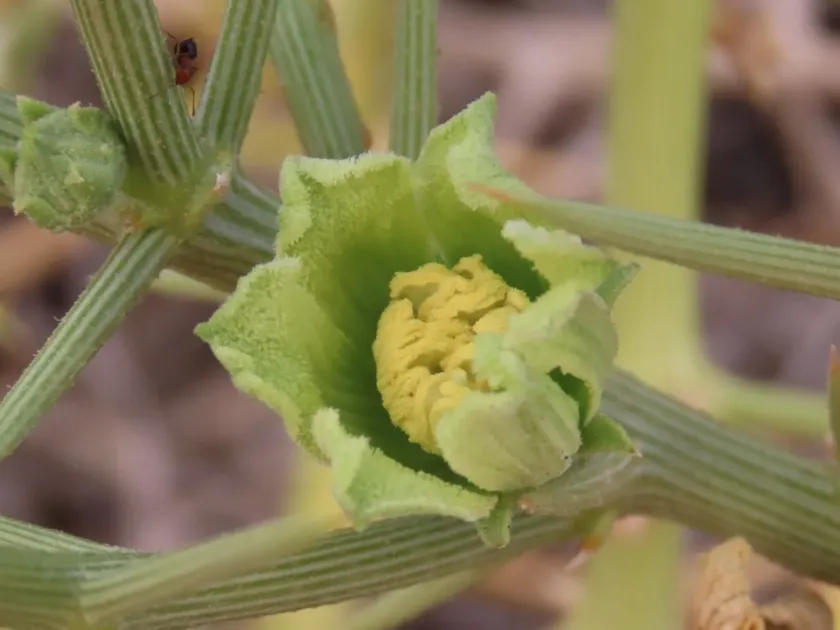
Description
Sowing dates
Nara is a perennial plant that does not propagate through traditional sowing methods used for field crops. In the natural environment of the Namib Desert, seeds germinate in the sand when sufficient moisture is available, penetrating deep after rare rainfall.
For artificial cultivation, seeds are sown directly at the permanent site because the plant's powerful taproot system is extremely sensitive to transplanting. The sowing depth should be approximately 5–10 cm to ensure contact with the moist sand horizon.
The optimal time for germination is after seasonal rains when soil temperatures stabilize. In controlled growing conditions, it is crucial to ensure the substrate warms to 25–30 degrees Celsius to stimulate emergence.
The plant has a high capacity for self-regeneration in suitable ecological niches. During plantation establishment, cluster sowing is practiced to increase the chances of seedling survival in harsh desert conditions.
An important success factor is the absence of weed competition in the early developmental stages. After the appearance of the first true leaves, the plant's growth rate accelerates significantly due to root system adaptation.
Growing requirements
Acanthosicyos horridus belongs to the Cucurbitaceae family and is an endemic species of the Namib Desert. It is a leafless shrub with developed thorns that has evolved to survive in extremely arid environments.
The crop is highly dependent on deep groundwater, which it reaches with its deep taproot. Without access to underground moisture, the plant cannot sustain its life functions or fruit production.
It prefers sandy soils and dune landscapes, where the loose substrate structure allows the root system to penetrate freely up to 10 meters deep. Soil composition must ensure free drainage and aeration.
Climate requirements include high solar intensity and significant diurnal temperature fluctuations. Nara does not tolerate frost and requires a consistently warm environment for its metabolic processes.
The plant possesses a unique ability to capture condensation and fog, which helps it survive during prolonged drought. These morphological adaptations make it an ideal candidate for fixing shifting sands.
Yield
Nara fruits are large orange berries covered in thorns, which taste similar to melon or squash. Yield depends heavily on proximity to water sources and the age of the bush.
The productivity of one mature plant can reach dozens of fruits per season, which ripen unevenly. Fruiting is spread over time, requiring regular monitoring of the plantations.
Economic use of the fruit includes fresh consumption of the pulp and processing of the seeds, which are rich in valuable oil and protein. The seeds constitute a significant portion of the crop's value.
Harvesting is a labor-intensive process due to the sharp thorns on the shrub's stems. Special protective gear is used to minimize skin damage during the harvest.
The economic efficiency of growing Nara is determined by the high demand for seeds and their processed products in local markets. Yield is stable when the hydrological regime of the site is maintained.
Main diseases and pests
The crop has high resistance to typical cucurbit diseases due to its habitat, where pathogens do not thrive easily. The main threats to the plant are large desert animals.
Rodents and certain species of local ungulates can damage young shoots and fruits, reducing overall yield. Securing the perimeter of the site is a necessary condition of good agricultural practice.
Insect pests are rare, but during periods of abnormal humidity, localized outbreaks of root neck fungal diseases are possible. Fungal infections are often associated with standing water near the soil surface.
It is important to avoid excessive moisture in the root zone, as this leads to root rot and plant death. In open sand conditions, natural drainage is usually sufficient to prevent rot.
The main risks are associated with the disruption of groundwater levels, leading to the wilting of plantations. Groundwater level monitoring is a basic protective measure to maintain the health of the stands.
Harvesting
Harvesting is carried out as the fruits fully ripen and acquire a characteristic bright color. Under-ripe fruits do not possess sufficient flavor or seed value.
Traditional collection methods include manual selection of ripe fruits. After harvest, fruits are often fermented or dried to extract the seeds, which are the most valuable commercial component.
Fruit pulp can be used to produce jams, though it is often a byproduct. Seeds are carefully cleaned, washed, and sun-dried for subsequent storage or sale.
It is important to ensure proper storage conditions for seeds in a cool, dry place to prevent the oil they contain from going rancid. Quality storage preserves the viability and nutritional properties of the product.
Adhering to harvest timelines is critical, as over-ripe fruits may be scavenged by wild animals or begin to spoil on the bush. Speed of harvest directly impacts profitability.