
Humbertia madagascariensis
Humbertia madagascariensis
Description
Growing requirements
Humbertia madagascariensis is a distinct tree species belonging to the Convolvulaceae family. Unlike its vining relatives, this plant develops into a large, sturdy tree, representing a unique evolutionary branch within this primarily herbaceous botanical group.
This species is endemic to Madagascar, where it is found in the humid tropical forests of the eastern region. The tree thrives in nutrient-dense soils that offer excellent drainage, which is critical for the development of its extensive and robust root system.
Regarding climate, the plant requires a tropical environment characterized by high year-round humidity and significant annual precipitation. It lacks tolerance for drought conditions and necessitates protection from harsh winds during its formative years of development.
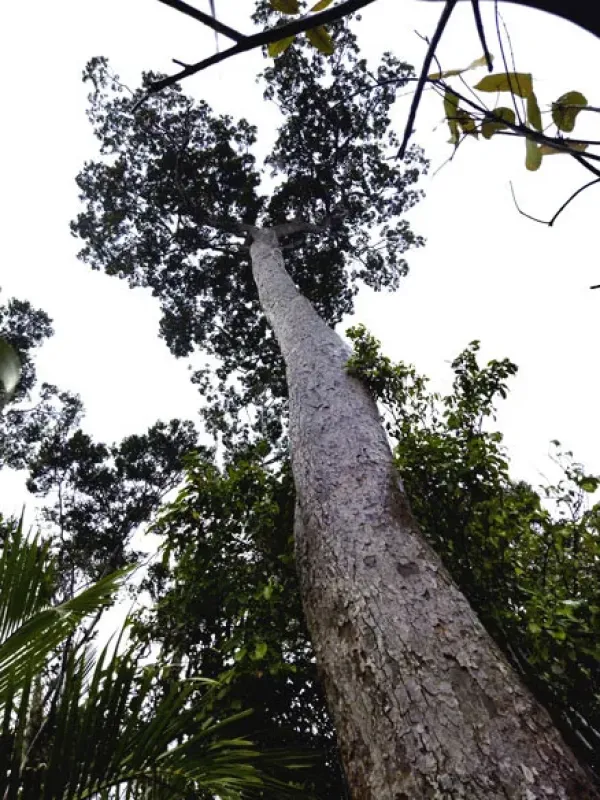
The botanical structure of this species includes a straight, cylindrical bole and high-density wood, which is its most notable feature. Its growth is relatively slow, reflecting an adaptation to the stable but highly competitive environment of the primary rainforest canopy.
Conservation efforts are essential to protect the species from extinction. Research into propagation and sustainable cultivation is vital to ensure that the ecological niche filled by this tree remains intact while managing its valuable resources.
Harvesting
The primary economic use of Humbertia madagascariensis is its timber, marketed locally as voavontsy. This wood is highly prized for its exceptional durability and resistance to wear, making it a preferred material for high-quality furniture and structural components.
Because the tree species is becoming increasingly rare in the wild, commercial harvest is strictly regulated. Current forestry practices prioritize the preservation of remaining stands, aiming to balance economic demand with the urgent need for biodiversity conservation.