
Hawaiian dodder
Cuscuta sandwichiana
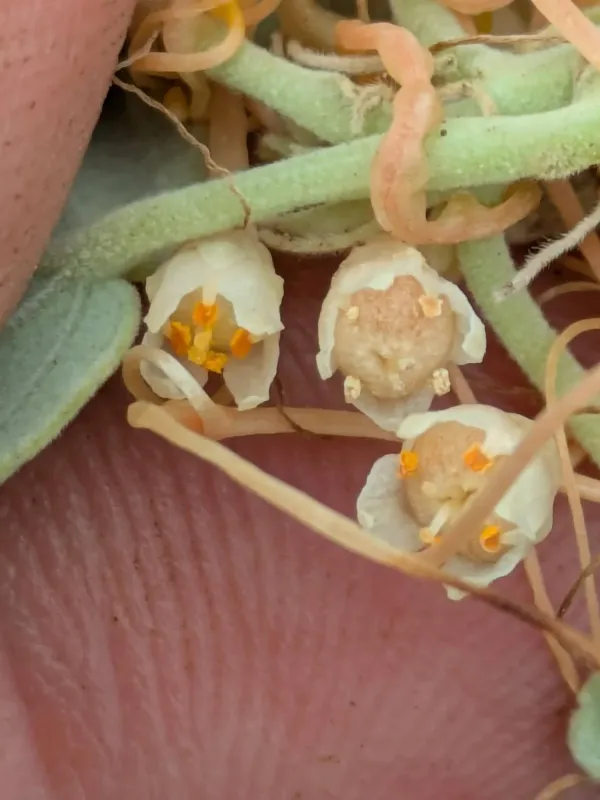
Description
Growing requirements
The Hawaiian dodder (Cuscuta sandwichiana) is a fascinating parasitic plant species belonging to the Convolvulaceae family. It is an endemic species found only in the Hawaiian Islands, representing a vital component of the local coastal biodiversity.
As a parasitic plant, it lacks chlorophyll and functional roots, relying entirely on host plants for its survival. It attaches to its host using specialized structures called haustoria, which penetrate the host tissues to extract water, minerals, and organic nutrients.
The natural habitat of the Hawaiian dodder is primarily restricted to coastal sand dunes and strand ecosystems. These environments provide the necessary exposure to intense sunlight and specific host species, such as native coastal shrubs and grasses.
Botanically, the plant is characterized by slender, twining, leafless stems that range in color from pale yellow to orange. This simple vegetative structure is highly efficient for wrapping around host stems and establishing a parasitic connection within a short period.
The climate requirements for this species are centered on the tropical coastal conditions of Hawaii. It thrives in high temperatures and tolerates the saline environment of beach zones, where other plants might struggle, provided the host plant is present.
Main diseases and pests
The primary threat to the Hawaiian dodder is the degradation of its fragile coastal habitat. Urban development, recreational beach activities, and infrastructure projects along the shoreline directly reduce the available land for the dodder and its hosts.
Invasive plant species pose a significant risk by altering the structure of the coastal communities. When native host plants are replaced by introduced vegetation, the Hawaiian dodder often fails to adapt, leading to a decline in its population.
Insect pests and pathogens specific to native Convolvulaceae may cause localized outbreaks that damage the dodder. Since the plant is already restricted to isolated patches, such natural stresses can exacerbate its vulnerability to extinction.
Climate change and rising sea levels accelerate coastal erosion, directly threatening the remaining habitats. The loss of sandy shorelines eliminates the ecological niches that this species has occupied for millennia.
Conservation efforts are currently focused on mapping the distribution of the Hawaiian dodder and protecting key areas of its habitat from further disturbance. Protecting this species is essential for maintaining the ecological integrity of Hawaii's unique sand dune systems.