
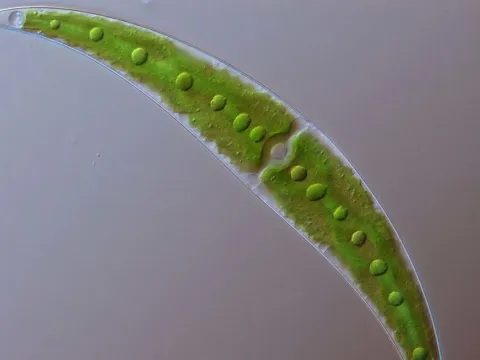
Closterium
Closterium
Closterium is a genus of unicellular green algae belonging to the Desmidiaceae family. These organisms are common inhabitants of freshwater ecosystems and serve as essential producers in the aquatic food chain rather than traditional agricultural crops.
What the section contains

Closterium
Morphologically, Closterium cells are known for their distinct elongated shape, often curved or crescent-like, with tapering ends. The cells contain large, well-defined chloroplasts with pyrenoids, facilitating efficient photosynthetic activity in diverse light conditions.
The optimal environment for Closterium includes slightly acidic to neutral freshwater habitats, such as ponds, marshes, and the littoral zones of lakes. They thrive in stagnant or slowly moving water where nutrients and sunlight are consistently available.
Reproduction primarily occurs through vegetative cell division, though sexual reproduction via conjugation is also observed under specific environmental cues. During unfavorable conditions, they can produce zygotes, which are highly resistant to desiccation and thermal stress.
In aquaculture and pond management, Closterium acts as a vital component of the natural food web. It is a primary food source for various aquatic invertebrates and fish fry, playing a constructive role in the overall productivity of the aquatic environment.
Eutrophication caused by nutrient runoff remains the most significant threat to Closterium populations. Excessive nitrogen and phosphorus levels stimulate bloom-forming cyanobacteria, which outcompete desmids and degrade the water quality.
Fungal infections, particularly those caused by chytridiomycetes, can devastate populations of green algae. These pathogens infect individual cells, leading to rapid decline and disruption of the local aquatic microflora.
The presence of chemical pollutants, including agricultural herbicides and heavy metals, interferes with the metabolic processes of Closterium. Because of their sensitivity, they are frequently used as biological indicators for water quality assessment.
Physical disturbance of water bodies, such as dredging or draining, destroys the stable habitat required by the algae. Prolonged habitat loss prevents the recovery of the local population, despite the survival of dormant zygotes in the sediment.
Predation by zooplankton species is a natural process, but an imbalance in the predator-prey ratio can lead to overgrazing. Managing the nutrient levels is crucial to ensure that Closterium biomass remains sufficient for supporting the higher trophic levels.