
Closterium moniliferum
Closterium moniliferum
Description
Growing requirements
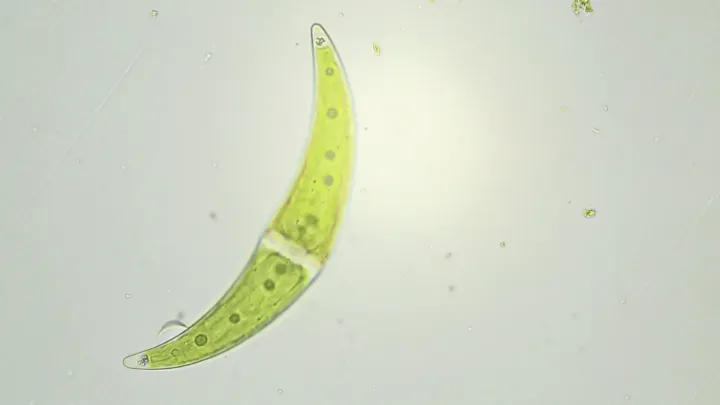
Closterium moniliferum is a species of desmid green algae recognized by its distinct crescent-shaped, elongated cells. It belongs to the family Closteriaceae and is commonly studied for its symmetrical structure and evolutionary adaptation to freshwater environments.
The cultivation of this alga requires precise environmental control. It thrives in stable temperatures ranging from 18 to 22 degrees Celsius. Maintaining light intensity is critical, as it requires moderate indirect light to perform photosynthesis without inducing photo-inhibition.
Soil-water extract media or specifically balanced mineral solutions are necessary for successful growth. The medium must maintain a neutral pH to ensure the structural integrity of the cells and prevent mineral precipitation.
Proper aeration techniques are vital in a laboratory or pilot-scale setting. Unlike fast-growing phytoplankton, Closterium moniliferum requires gentle agitation to prevent cell settling while avoiding mechanical shear stress on the delicate cell walls.
In terms of agricultural and industrial use, this species is investigated for its potential to produce polyunsaturated fatty acids and antioxidants. Its role as a biological sensor for water quality monitoring remains one of its most significant applications.
Main diseases and pests
The primary threat to the culture is contamination by faster-growing eukaryotic algae or cyanobacteria. These opportunistic organisms can rapidly outcompete the culture for light and nutrients, leading to a complete collapse of the population.
Grazing by protozoans, particularly ciliated organisms and rotifers, poses a continuous risk in non-axenic cultures. These predators can consume significant portions of the biomass within a few days if not strictly managed.
Fungal pathogens and parasitic chytrids are known to attack desmid populations. Early detection through regular microscopic inspection is essential to quarantine infected batches and prevent the spread of the pathogen.
Chemical instability within the growth medium, specifically the depletion of phosphorus or iron, can weaken the cell walls, making them highly susceptible to environmental stress and secondary infections.
Excessive ultraviolet radiation causes significant damage to the photosynthetic apparatus of the cells. This leads to the bleaching of chlorophyll and eventual cell death, which is a major concern when using transparent reactor systems.