
Pithophora
Pithophora
Pithophora is a genus of filamentous green algae belonging to the family Pithophoraceae. In an agricultural and hydrological context, this organism is treated not as a crop, but as a persistent and problematic weed that disrupts the functionality of irrigation networks.
What the section contains

Pithophora
The organism thrives in stagnant or slow-moving freshwater environments that are rich in nutrients such as phosphorus and nitrogen. Its ability to tolerate varying environmental conditions makes it a common pest in farm ponds, drainage canals, and irrigation infrastructure.
Optimal growth conditions involve water temperatures ranging from 20°C to 30°C. In these environments, Pithophora develops dense, coarse mats that float on the water surface or grow along the bottom, creating severe blockages that impede water flow and degrade water quality.
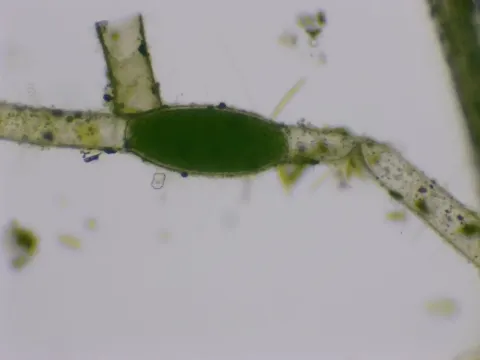
Botanically, Pithophora is characterized by its branching filaments and the development of specialized thick-walled cells called akinetes. These cells serve as survival structures, enabling the algae to persist through periods of drought, freezing temperatures, or chemical treatment.
There are no significant commercial uses for Pithophora in agriculture. Instead, it is viewed as an economic burden. Its presence necessitates constant maintenance to keep irrigation pumps, filters, and delivery channels operational, as the algae can quickly clog system components.
The primary threat posed by Pithophora is the physical obstruction of irrigation equipment. Dense mats of algae can significantly reduce flow capacity, leading to water shortages for crops during critical growth stages and requiring costly labor for manual or chemical removal.
While Pithophora itself is not prone to diseases, it acts as a biological pollutant. When large mats of the algae die off, they decompose rapidly, consuming large amounts of dissolved oxygen. This depletion can harm aquatic life and disrupt the balance of the local ecosystem.
Management of Pithophora is challenging because of its resistance to many traditional algicides. Control efforts often require a multi-faceted approach, combining physical removal (raking or dredging) with the strategic application of copper-based or other specialized chemical treatments.
Integrated pest management strategies emphasize the importance of nutrient control. Minimizing the runoff of fertilizers from agricultural fields into water bodies can significantly reduce the potential for algal blooms, thereby limiting the growth of Pithophora populations.
Sanitation practices are vital to prevent the spread of this algae. Equipment, boats, and machinery moving between different water bodies must be cleaned thoroughly to ensure that dormant akinetes are not transported to new, unaffected irrigation systems.