
Pithophora zelleri
Pithophora zelleri
Description
Growing requirements
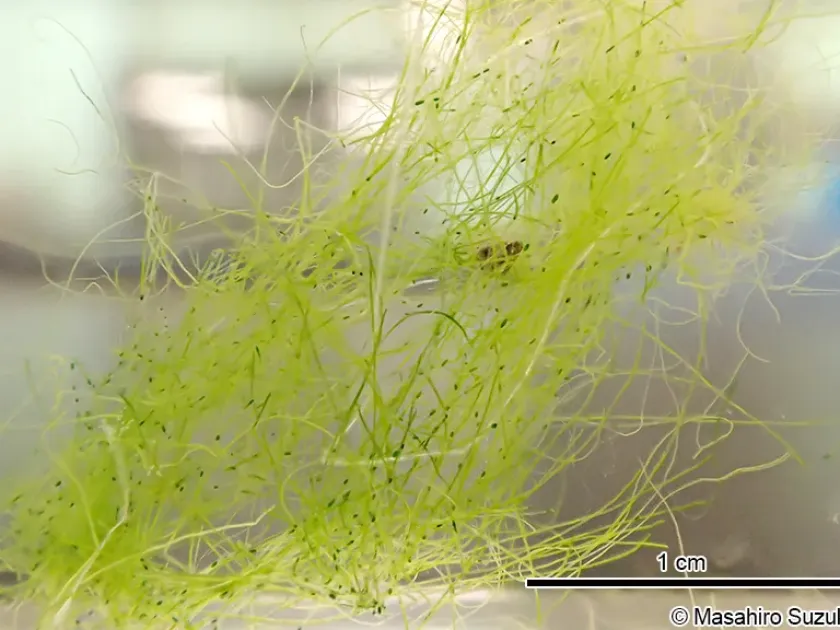
Pithophora zelleri is a species of filamentous green algae belonging to the Pithophoraceae family. It is primarily studied within the field of hydrobiology rather than traditional agriculture, appearing in freshwater environments globally.
The species thrives in stagnant or slow-moving waters enriched with nutrients. High concentrations of nitrates and phosphates in the water column act as catalysts for its rapid proliferation during the warm seasons.
Structurally, it consists of branched filaments with multinucleate cells. The presence of akinetes, which are thick-walled dormant cells, is a critical adaptation that allows the algae to persist through winter and colonize the environment rapidly when conditions improve.
Environmental requirements for growth include high light exposure and water temperatures ranging from 20°C to 30°C. These conditions facilitate rapid vegetative reproduction, leading to the formation of extensive, dense algal mats.
Regarding its utility, the biomass of Pithophora zelleri is being investigated as a potential candidate for sustainable soil conditioning, provided that proper processing techniques are employed to stabilize nutrients.
Main diseases and pests
Biological threats to Pithophora zelleri populations primarily include various viral pathogens specific to aquatic algae that can cause significant decline in biomass.
Zooplankton grazing is another natural limiting factor, where various micro-crustaceans consume fragments of the algal filaments, thereby regulating population density.
Competitive stress from aquatic macrophytes poses a significant threat, as these plants compete for the same limited nutrient resources in a given freshwater system.
In aquaculture environments, the primary pest issue arises from the species' own rapid growth, which can choke irrigation filters and deplete dissolved oxygen levels.
Management strategies focus on nutrient control and mechanical harvesting, as chemical interventions are often avoided to prevent non-target environmental toxicity.