
Cistus skanbergii
Cistus skanbergii
Description
Growing requirements
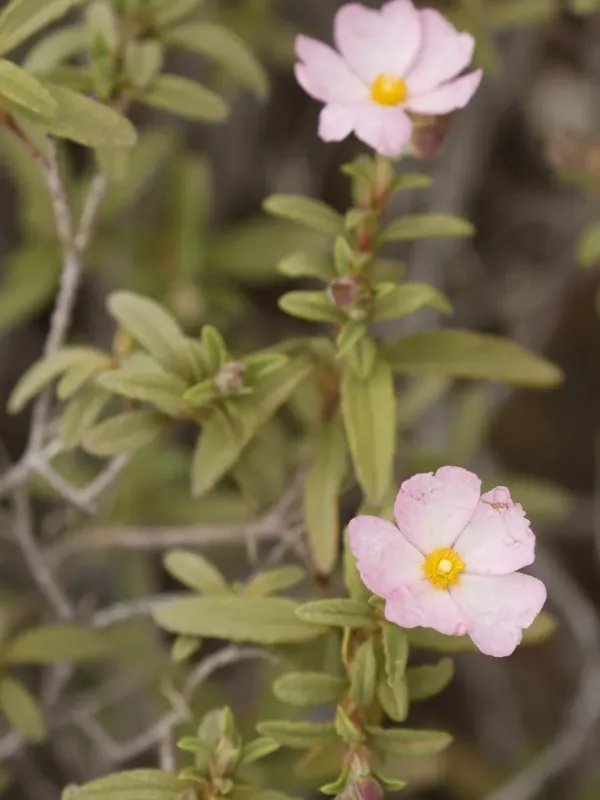
Cistus skanbergii is an evergreen ornamental hybrid shrub belonging to the Cistaceae family. This species is recognized for its compact growth habit and delicate pale pink flowers, which appear in late spring and early summer.
The plant thrives in full sun, requiring exposure to direct sunlight for the majority of the day to reach its full potential. It is perfectly adapted to hot, dry climates and serves as a classic choice for xeriscaping in Mediterranean-style gardens.
Soil requirements for Cistus skanbergii are specific: it demands excellent drainage and prefers poor, rocky, or sandy substrates. It performs poorly in heavy, clay-rich soils that retain moisture, as these conditions frequently lead to root rot.
Regarding hardiness, this shrub can tolerate light frosts but requires protection during severe winter months. In colder regions, it is best grown in containers, allowing the plant to be moved indoors or to a sheltered area during extreme weather.
Maintenance is minimal once the plant is established. Annual pruning after flowering is recommended to maintain a bushy shape and prevent the plant from becoming woody and sparse over time, ensuring a fresh look for the next season.
Main diseases and pests
The most critical threat to Cistus skanbergii is overwatering, which quickly causes root decay. Ensuring the plant is not kept in waterlogged soil is the primary step in preventing lethal fungal infections within the root zone.
Aphids are the most common pests, often targeting the soft new growth and developing flower buds. During the spring season, regular inspections of the tips of the branches are necessary to detect and manage these pests effectively.
Spider mites may occasionally occur, particularly in hot, dry, and stagnant air environments. Increasing the ventilation around the shrub is often sufficient to prevent mite infestations without the need for heavy chemical intervention.
Powdery mildew can affect the foliage if the plant lacks sufficient airflow. This usually happens in crowded plantings or poorly ventilated gardens, making proper spacing during the planting phase an essential preventive measure.
In case of infestation or infection, it is advised to remove the affected parts promptly. For chemical control, ensure that the chosen products are safe for rock rose species to avoid phytotoxic damage to the delicate leaves.